The first sign may be a slow drain, a damp cabinet floor, or a water heater that suddenly delivers a cold shower. Then comes the question most homeowners ask before calling anyone: how much does plumbing cost?
For a routine residential visit, a sensible starting budget is about $150 to $500. Small, accessible repairs may stay near the lower end. A complicated leak, sewer-line problem, repipe, or after-hours failure can cost from several hundred dollars to well into five figures. The price depends less on the visible symptom than on where the fault sits, how difficult it is to reach, and what must be disturbed to repair it.
That wide range is frustrating, but plumbing is not priced like a boxed product. A plumber is selling diagnostic skill, licensed labor, travel time, tools, business insurance, code compliance, and responsibility for a system that can damage a house if the work fails. Materials may be only a small part of the invoice.
This guide explains typical 2026 prices, how plumbers build estimates, where budgets commonly go wrong, and how to compare bids fairly. The goal is not to promise one national number. It is to help you recognize a reasonable quote.
The short answer: average plumbing costs at a glance
Most homeowners can use these broad planning ranges:
| Plumbing service | Typical 2026 cost |
|---|---|
| Service-call or diagnostic fee | $100–$250 |
| Standard plumber labor | $45–$200 per hour |
| Minor faucet or toilet repair | $100–$350 |
| Standard drain clearing | $100–$300 |
| Fixture replacement | $250–$1,200+ |
| Water-heater repair | $150–$700 |
| Water-heater replacement | $900–$3,100+ |
| Main sewer-line service or repair | $400–$7,500+ |
| Partial pipe replacement | $500–$4,000+ |
| Whole-house repiping | $2,000–$15,000+ |
| Emergency service | often 1.5–3 times normal rates |
Published 2026 consumer-cost data puts common service-call fees around $100 to $250 and standard hourly charges around $45 to $200. Those figures overlap because many companies apply the visit fee toward the first hour, while others charge it separately. Always ask.
When someone searches average plumbing cost, the most useful answer is not a single midpoint. It is a range tied to a defined scope. Clearing a trap under a sink and excavating a collapsed sewer both count as plumbing, yet they have almost nothing in common operationally.
What is included in a plumber’s bill?
A professional invoice may contain more than “hours plus parts.” Understanding each layer makes an estimate much easier to assess.
Service call and diagnosis
The plumber service call fee covers dispatch, travel, vehicle expenses, and time reserved for the appointment. Expect roughly $100 to $250 in many markets. Some companies waive or credit it if you authorize the repair. Others treat diagnosis as a distinct paid service, especially when leak-detection equipment or a sewer camera is involved.
Ask this exact question before booking: “Is the diagnostic or trip fee applied to the repair if I proceed?” When comparing companies, a $79 visit that excludes diagnosis may not be cheaper than a $150 visit that includes it.
Labor
The plumber hourly rate commonly falls between $45 and $200, though established licensed firms in expensive cities may charge more. A flat-rate company may not show an hourly figure at all. Its price book assigns a set amount to a defined task, allowing for average labor, overhead, warranty risk, and parts.
Hourly billing can be fair for uncertain diagnostic work. Flat pricing gives the homeowner certainty when the scope is known. Neither model is automatically better. What matters is whether exclusions are clear and the final authorization is written.
Parts and materials
A $12 valve from a retail shelf will not appear on a professional invoice at $12. Contractors normally mark up parts to cover sourcing, stocked inventory, delivery, handling, callbacks, and warranty administration. Larger jobs may involve copper, PEX, PVC, cast iron, press fittings, valves, hangers, insulation, and fire-stopping materials.
The cheapest fitting is not always the lowest-cost choice. A plumber may select Viega press fittings, Uponor PEX systems, SharkBite products for suitable accessible applications, or manufacturer-approved water-heater components based on code and warranty requirements. Product choice should fit the application, not merely the lowest shelf price.
Permits, inspection, and code work
Simple repairs often need no permit. New water heaters, relocated fixtures, gas work, sewer replacements, and major repiping frequently do. Permit fees may start around $75 to $200, but municipal schedules vary widely. The quote should state who obtains the permit and whether inspection corrections are included.
Code-triggered upgrades can surprise owners of older homes. Replacing equipment may require a drain pan, expansion tank, seismic strapping, vent changes, shutoff updates, backflow protection, or combustion-air improvement. These are not decorative extras; they address safety and current installation standards.
Access and restoration
Plumbers repair pipes. They do not always repair drywall, tile, cabinets, landscaping, or concrete afterward. A leak behind an open basement ceiling is inexpensive to reach. The same failure behind a tiled shower wall may require careful demolition and a separate finish contractor.
Before accepting a quote, identify who will open the surface, remove debris, dry wet materials, test for mold when appropriate, and restore finishes. The cost of plumbing repair can look modest while the complete property-restoration cost is much larger.
Plumbing repair costs by common problem
The following ranges assume normal access and ordinary materials. Extensive corrosion, nonstandard fixtures, failed shutoff valves, or hidden water damage can raise them.
Leaky faucets and pipes
A basic faucet repair may cost $100 to $300. Replacing the faucet often runs $200 to $600 including ordinary labor, with designer fixtures pushing the total higher. An accessible leaking pipe may cost $150 to $850; concealed or underground leaks can be far more expensive.
The phrase leak repair cost hides three separate tasks: finding the leak, reaching it, and fixing it. A stain on the ceiling does not prove the pipe directly above it failed. Water can travel along a joist before appearing. Skilled diagnosis prevents unnecessary holes and repeated repairs.
EPA WaterSense materials report that average household leaks can waste more than 10,000 gallons per year, while 10% of homes have leaks wasting at least 90 gallons a day. That makes a small leak both a repair issue and an ongoing utility expense.
Clogged sinks, tubs, and showers
A straightforward drain cleaning cost is usually $100 to $300. A plumber may remove and clean a trap, use a hand auger, or run a powered cable. Deeper blockages, roof access, fragile old piping, and recurring clogs raise the price.
A chemical drain cleaner may appear cheaper, but repeated use can damage some piping and complicate professional service. If several fixtures back up together, the fault may be in a branch or main line rather than at one fixture. Tell the dispatcher every symptom.
Toilet repairs and replacements
Common toilet repairs—flappers, fill valves, supply lines, wax seals, or minor clogs—often cost $100 to $350. The toilet installation cost typically lands around $350 to $800 when the toilet and labor are included. Premium bidet toilets or concealed-tank systems cost much more.
A simple replacement can expand if the flange is broken, the shutoff will not close, or the subfloor is rotten. Rocking toilets should be addressed promptly because a failed seal can wet the structure without producing an obvious puddle.
Garbage disposals
Repair commonly costs $100 to $250; replacement is often $200 to $600 depending on horsepower, wiring, sink compatibility, and local labor. Before calling, confirm the unit has power and press its reset button once. Never place a hand inside the chamber, even when the switch is off.
Sump pumps
A basic sump-pump replacement may run $500 to $1,500. Adding a new pit, discharge piping, battery backup, alarm, or dedicated electrical work raises the total. Because sump pumps protect against high-consequence flooding, compare pump capacity, backup strategy, and warranty—not only the installation figure.
Installation and replacement prices
New installations often cost more than repairs because they involve fixture removal, supply and drain changes, code updates, testing, and disposal.
Sink and faucet installation
The sink installation cost can range from $250 to $1,000 or more. A like-for-like drop-in sink is relatively direct. An undermount sink with countertop work, a relocated drain, disposal, dishwasher connection, or new valves is not.
Faucet-only replacement commonly costs $150 to $500 plus the fixture. Tight cabinets, corroded mounting hardware, and inaccessible basin nuts add time. Supplying the exact model number lets a plumber check compatibility before arrival.
Shower and bathtub plumbing
A shower-valve replacement might cost $400 to $1,200, depending on access and whether the wall must be opened. Full shower or tub plumbing can run $1,500 to $5,000 before tile, waterproofing, glass, and finish work. Moving the drain or changing a tub to a shower adds complexity.
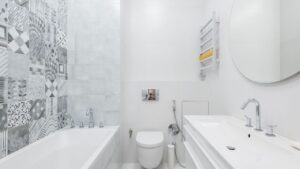
The bathroom plumbing cost is lowest when the toilet, vanity, and shower remain close to existing stacks and supply lines. Moving a toilet several feet can affect drain slope, venting, joists, and the ceiling below. A layout that looks simple on paper may require structural coordination.
Water heaters
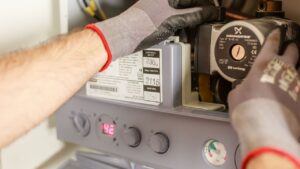
Water-heater repair generally runs $150 to $700. A conventional tank replacement often costs roughly $900 to $3,100 installed, while tankless, heat-pump, power-vented, or high-efficiency models may cost more because they can require electrical, gas, condensate, or vent changes.
The water heater installation cost should be compared by complete scope: unit, removal, permit, connectors, valves, expansion control, drain pan, venting, startup, and warranty. A low equipment price is not a full installed price.
Brands such as Rheem, A. O. Smith, Bradford White, Rinnai, and Navien offer different product categories and warranty structures. Choose capacity and fuel type from household demand and site conditions, not brand recognition alone.
Dishwashers, refrigerators, and laundry connections
Connecting an appliance to existing, compliant plumbing may cost $150 to $500. Installing a new supply, drain, standpipe, box, or shutoff can cost $500 to $2,000 or more. An appliance retailer’s installation package often assumes the plumbing already meets strict conditions. Read those conditions before delivery day.
Whole-house plumbing and major projects
Repiping an existing home
The whole house repipe cost often ranges from $2,000 to $15,000+, depending on house size, fixture count, stories, access, pipe material, local labor, and restoration. Large homes, slab construction, historic finishes, or extensive copper work may exceed that range.
PEX is usually quicker to route and less expensive than copper. Copper has a long service history and may be preferred or required in some situations. The right choice depends on water chemistry, UV exposure, pest risk, code, workmanship, and owner preference. Get the proposed material, manufacturer, pipe sizing, valve scope, and wall-opening plan in writing.
A quote saying “repipe house” is too vague. It should say whether it includes hot and cold distribution, main shutoff, hose bibbs, fixture stops, laundry, refrigerator, water-heater connections, abandoned-pipe removal, insulation, permits, drywall patches, texture, and paint.
Plumbing a new house
The new construction plumbing cost is commonly estimated by fixture, square footage, or detailed takeoff. A broad residential range might be $4.50 to $12+ per square foot, but luxury fixtures, multiple kitchens, long pipe runs, difficult utility connections, and local requirements can move it higher.
New-house plumbing normally has rough-in and finish phases. Underground drains may be installed before the slab; supply, waste, and vent piping follows framing; fixtures and trim arrive later. Changes after rough-in are expensive because completed work must be rerouted.
Kitchen remodel plumbing
Keeping a sink and dishwasher in place may limit plumbing work to $500 to $2,000. Moving them across the room, adding a pot filler, installing an island sink, upgrading gas, or replacing damaged drains can push kitchen plumbing cost to $2,000 to $8,000+.
Island sinks are especially easy to underestimate. Drainage and venting need a code-compliant design, and routing may involve the floor structure or slab. Have a licensed plumber review the layout before cabinetry is ordered.
Bathroom remodel plumbing
A modest bathroom with fixtures staying in place may involve $1,500 to $4,000 in plumbing. A full relocation or added bathroom can cost $5,000 to $15,000+ before tile, cabinetry, electrical, ventilation, and finishes.
Here again, bathroom plumbing cost depends on geometry. Stacking a new bathroom above an existing wet area may save thousands compared with placing it across the house. Early coordination among the plumber, remodeler, structural professional, and building department avoids expensive redesign.
Sewer and water-service costs
Main-line clogs and camera inspections
Main-line clearing often costs $300 to $800. A sewer-camera inspection may add $250 to $1,000 depending on location, line length, access, and whether locating is included. Hydro jetting can run $600 to $1,500+.
The sewer line repair cost becomes significant when the pipe is broken, offset, bellied, root-damaged, or collapsed. A camera image should be paired with a plain-language diagnosis. Ask for the defect’s location, depth, and footage—not merely a claim that the entire line is “bad.”
Excavation and trenchless replacement
Spot repairs may cost $1,500 to $7,500. Full replacement can range from $4,000 to $25,000+ based on length, depth, soil, street work, landscaping, and method. Trenchless lining or pipe bursting can reduce surface destruction, but neither method suits every damaged pipe.
Compare total restoration. An excavated bid may be cheaper until driveway, sidewalk, irrigation, or mature landscaping is added. A trenchless bid may cost more upfront but preserve high-value surfaces.
Main water line
Water-service repair or replacement commonly costs $1,500 to $8,000+, with long runs, deep frost lines, rock, street connections, and directional boring increasing price. Confirm where homeowner responsibility begins; the utility’s side of the meter and the owner’s side may be treated differently.
Why plumbing quotes vary so much
Location and labor market
Rates are typically higher in New York City, San Francisco, Los Angeles, Seattle, Boston, and other high-cost markets than in smaller cities. Licensing, insurance, rent, fuel, parking, and technician wages all affect overhead. The Bureau of Labor Statistics reported a $62,970 median annual wage for plumbers, pipefitters, and steamfitters in May 2024, showing why skilled labor is a meaningful part of the bill.
Searching plumber cost near me is useful only if the results reflect your municipality and project. National numbers help with planning, not contractor selection.
Access
Open crawlspace piping is faster to repair than a pipe below a post-tensioned slab. Finished basements, tiled walls, narrow utility closets, buried valves, and occupied commercial spaces all slow the work.
Urgency
The emergency plumber cost often runs 1.5 to three times standard pricing. Published 2026 data shows emergency hourly charges around $100 to $500, with some holiday calls reaching $600. That premium pays for immediate dispatch and after-hours staffing.
If water is causing damage, shut off the nearest fixture valve or main supply when safe, turn off affected electrical circuits only if you can do so safely, and call promptly. Waiting to avoid an emergency fee can be false economy when flooring, cabinets, or ceilings are getting wet.
Home age and prior workmanship
Galvanized steel, cast iron, polybutylene, lead service lines, obsolete valves, and mixed-material repairs may require special handling. Older homes can also contain asbestos-bearing materials or lead paint that must be managed by qualified professionals.
Scope clarity
One bidder may quote the visible repair; another may include the failing shutoff, code updates, wall patch, permit, and cleanup. The second estimate looks higher because it solves a larger problem. Compare scope line by line before comparing totals.
A real-world estimate comparison
Consider a 40-gallon gas water heater leaking in a basement. Three quotes arrive:
| Bid | Price | What it includes |
| A | $1,250 | Heater and basic swap; permit and disposal excluded |
| B | $1,850 | Heater, permit, disposal, expansion tank, pan, new shutoff, warranty |
| C | $2,400 | Everything in B plus vent correction and combustion-air work |
Bid A is not necessarily wrong, and Bid C is not necessarily excessive. If inspection requires vent and combustion-air corrections, C may be the only complete number. A homeowner choosing A could later pay change orders that exceed C.
This example explains why asking how much does plumbing cost without defining site conditions produces weak answers. A good estimate documents assumptions. A good homeowner asks what happens if those assumptions are wrong.
How to estimate your plumbing budget
Use a five-part model:
Estimated total = diagnosis + labor + materials + permits/access + restoration/contingency
For a defined replacement, request a written flat quote. For concealed troubleshooting, authorize a capped diagnostic phase—for example, up to two labor hours—then require approval before repair. On remodels and repipes, carry a 10% to 20% contingency, especially in older homes.
Your planning worksheet should record:
- Exact symptom and when it started
- Affected fixtures
- Pipe or fixture age, if known
- Photos and model numbers
- Shutoff accessibility
- Standard versus urgent timing
- Permit responsibility
- Surface opening and restoration
- Warranty terms
- Tax, disposal, travel, and minimum charges
This method produces a much better plumbing estimate than multiplying a guessed hourly rate by guessed hours.
How to save money without buying a bad repair
Combine nonurgent tasks
If a plumber is already visiting, ask whether replacing two worn shutoffs or fixing a second drip during the same appointment reduces the total trip and setup cost. Send the list in advance so the truck arrives with appropriate parts.
Make the work area accessible
Clear cabinets, move stored items, secure pets, and identify the main shutoff. Do not demolish walls unless instructed; the plumber may need to trace the leak first.
Buy fixtures carefully
Owner-supplied fixtures can save a markup, but missing parts, shipping damage, incompatibility, and limited labor warranties can erase the savings. Confirm the exact model before purchase and ask who handles a defective product.
Schedule preventive work during normal hours
Slow drains, corroded valves, intermittent heater faults, and a running toilet rarely improve. Addressing them on a weekday can avoid emergency plumber cost and secondary damage.
Get two or three comparable bids for large work
For a repipe, sewer replacement, or remodel, collect itemized scopes. Ask each contractor to quote the same material, fixture count, permit responsibility, restoration level, and warranty. A fair plumbing installation cost comparison requires equal assumptions.
Use rebates where available
Utilities and public agencies sometimes offer incentives for WaterSense toilets, efficient water heaters, heat-pump models, or lead-service replacement. Check current local programs before ordering. Rebates change, so do not rely on an old blog post.
Where DIY makes sense—and where it does not
A careful homeowner may replace a faucet aerator, toilet flapper, showerhead, or exposed supply hose after shutting off and testing the water. Local rules and product instructions still apply.
Call a licensed professional for gas lines, concealed leaks, sewer excavation, water-heater installation, frozen pipes, repeated backups, major repiping, and work requiring a permit. Stop immediately if you smell gas, see sewage entering the home, suspect contaminated water, or cannot stop active flooding.
DIY risk is not limited to the failed part. Cross-connections can contaminate potable water; poor venting can expose occupants to combustion gases; incorrect drain slope can cause recurring blockages; unlisted fittings may be concealed where they are not allowed. Insurance and resale documentation can also matter.
How to hire a plumber and read the estimate
Verify the contractor’s license through the relevant state or local board where licensing applies. Ask for proof of liability insurance and workers’ compensation. Look for a physical business identity, clear communication, and recent reviews that describe work similar to yours.
A strong written estimate should include:
- Company and customer details
- Project address
- Diagnosis and exact scope
- Materials, brands, and model numbers where relevant
- Permit and inspection responsibility
- What will be opened, protected, removed, and restored
- Price, payment schedule, and change-order procedure
- Start date or scheduling window
- Labor and material warranties
- Exclusions and assumptions
Be cautious with high-pressure claims that every component must be replaced immediately, especially when evidence is not shown. For expensive sewer or repipe work, paying for an independent second diagnosis can be sensible.
Also avoid automatically choosing the lowest plumbing estimate. A vague low bid can become an expensive project through add-ons. A clear higher bid can provide better cost control.
Plumbing cost myths that distort budgets
“The part costs only $20, so the repair should be cheap”
The invoice reflects diagnosis, travel, stocked inventory, tools, skill, insurance, overhead, installation, testing, and warranty exposure. Part price alone is a poor measure of job value.
“Hourly rate tells me the final price”
A technician at $160 per hour who diagnoses correctly in one hour may cost less than one at $90 who takes three hours and returns. Use the plumber hourly rate as one comparison point, not the whole decision.
“Trenchless sewer work is always better”
Lining cannot correct every belly or collapse, and pipe bursting has access requirements. The condition, geometry, connections, and local approval determine the suitable method.
“Home insurance pays for the plumbing”
Policies may cover sudden resulting water damage but exclude the worn pipe or gradual leak. Sewer backup often requires an endorsement. Read your policy and contact the insurer promptly; do not assume coverage.
Final budgeting advice
For everyday repairs, keep $300 to $500 available as a practical home-maintenance reserve. For an aging water heater, sewer, or supply system, build a larger sinking fund based on local quotes before failure. Know where the main water shutoff is and test accessible valves periodically under appropriate guidance.
The reliable answer to average plumbing cost is a documented range attached to a real scope. For minor work, expect hundreds. For equipment replacement, expect roughly one to several thousand. For underground lines, extensive remodeling, or whole-house piping, expect several thousand to tens of thousands.
The smartest question is not simply, “What is the lowest number?” Ask, “What problem does this price solve, what is excluded, and what evidence supports the recommendation?” That question protects both the house and the budget.
Frequently asked questions
How much does a plumber charge per hour?
The plumber hourly rate is commonly $45 to $200 in the United States, with licensed firms in high-cost areas sometimes charging more. A service fee, minimum charge, materials, and emergency premium may be separate.
What is a normal service-call fee?
The plumber service call fee is often $100 to $250. Ask whether it includes diagnosis and whether it is credited toward authorized repairs.
How much does it cost to fix a leaking pipe?
An accessible leak repair cost may be $150 to $850. Leak detection, wall opening, slab work, water-damage drying, mold treatment, and finish restoration can raise the complete cost substantially.
How much does drain cleaning cost?
A typical drain cleaning cost is $100 to $300 for a simple fixture blockage. Main-line cabling, camera inspection, hydro jetting, or difficult access may cost $300 to $1,500+.
How much does it cost to install a toilet?
The toilet installation cost is commonly $350 to $800 including a standard toilet and labor. Premium fixtures, flange repair, valve replacement, or damaged flooring can increase the bill.
How much does it cost to install a sink?
The sink installation cost often falls between $250 and $1,000+. Countertop cutting, disposal installation, relocated drains, new valves, and premium fixtures add cost.
How much does a new water heater cost installed?
The water heater installation cost is often $900 to $3,100+ for a conventional tank. Tankless, heat-pump, high-efficiency, and power-vent models can cost more when utilities or venting need modification.
How much does a whole-house repipe cost?
The whole house repipe cost generally ranges from $2,000 to $15,000+, but large or complex homes may exceed it. Material, fixture count, access, permits, and wall restoration are key variables.
How much does sewer-line repair cost?
The sewer line repair cost can begin around $1,500 for a limited accessible repair and exceed $25,000 for deep, long, or street-involved replacement. Camera evidence and location data should support the recommended scope.
How much does new plumbing cost per square foot?
The new construction plumbing cost may be roughly $4.50 to $12+ per square foot as an early planning allowance. Fixture count, building design, utility connections, and finish level produce a more accurate estimate than area alone.
What does plumbing cost for a kitchen remodel?
The kitchen plumbing cost may be $500 to $2,000 when fixtures remain in place, or $2,000 to $8,000+ when sinks, drains, gas, or appliance connections move.
How can I find a fair plumber near me?
Instead of relying only on a plumber cost near me search, verify licensing and insurance, request a written scope, compare equivalent bids, review warranties, and ask who handles permits and restoration.
How much does plumbing cost overall?
For readers asking how much does plumbing cost, routine repairs commonly fall between $150 and $500, fixture or equipment projects often cost hundreds to several thousand dollars, and major piping or sewer projects can reach five figures.