If you are checking how to spell equipment, here is the direct answer:
Equipment is spelled E-Q-U-I-P-M-E-N-T.
Say the letters in three manageable parts: equip + ment. The base word is equip, spelled E-Q-U-I-P, and the noun ending is -ment, spelled M-E-N-T. Join them without removing a letter or adding an extra one: equipment.
That may be all you need before sending an email, finishing an assignment, or correcting a product description. Yet this word causes more trouble than its nine letters suggest. People write equiptment because the past-tense form equipped has a t sound near the end. Others type equitment, equipement, or eqipment because they write by sound and lose a letter in the unstressed middle.
There is also a grammar trap. In standard English, equipment is normally an uncountable noun. You write “the equipment is ready,” not “the equipments are ready.” If you need to count individual objects, use “a piece of equipment,” “two pieces of equipment,” “three machines,” or the name of each item.
This guide goes past a spelling check. You will learn why the word looks the way it does, how to pronounce it without letting pronunciation distort the spelling, which mistakes appear most often, and how to use it naturally in school, work, healthcare, sports, construction, technology, and everyday conversation.
How Do You Spell Equipment? The Letter-by-Letter Answer
The correct form is:
E — Q — U — I — P — M — E — N — T
There are nine letters. The word begins with equi-, not eqi- or equiq-. It contains one p in its standard form. The last four letters are ment, a familiar noun-forming ending also found in agreement, development, employment, and management.
Here are three useful ways to break it down:
| Method | Breakdown | Why it helps |
|---|---|---|
| Base word + suffix | equip + ment | Connects the noun to the verb equip |
| Syllables | e + quip + ment | Supports slow pronunciation and dictation |
| Letter groups | EQUI + P + MENT | Protects the easily omitted u, i, or p |
The cleanest approach is equip + ment. If you can spell equip, you only need to attach ment. Do not insert a t between them. Equiptment may look plausible, but it is not the standard spelling.
Quick featured-snippet answer
How do you spell equipment? Spell it E-Q-U-I-P-M-E-N-T. Remember it as equip + ment. The correct word has nine letters, one p, and no t before the m. In standard usage, equipment is usually uncountable, so avoid equipments when referring to several items.
The Easiest Way to Remember the Correct Spelling of Equipment
The most reliable memory trick is not a random sentence. It is the word’s real structure:
EQUIP + MENT = EQUIPMENT
Start with the verb equip: “We equip the workshop with safe tools.” Add -ment to form the noun that names the things supplied: “The workshop equipment is ready.”
This method works because it gives every letter a job. The p belongs to equip. The m begins ment. There is no reason to squeeze a t between them.
For a visual reminder, write it like this during practice:
EQUI | P | MENT
The isolated P acts as a bridge. After several repetitions, remove the dividers and write the whole word normally.
If sound-based memory works better for you, use a short rhythm:
“E-Q-U-I-P, then M-E-N-T.”
Say it twice while writing it once. That combines hearing, speech, and hand movement. Simply rereading a correct word can create familiarity, but retrieving it from memory is the real test. Close the page, write the word, then check it. That small act shows whether you actually know it.
Why Equipment Is Commonly Misspelled
Spelling errors are often logical attempts built from misleading sound patterns. Equipment contains a lightly pronounced middle and a boundary between a short base word and a suffix. In natural speech, many speakers do not give equal weight to every letter. A learner may hear something close to “ih-KWIP-muhnt” and build a phonetic spelling from that sound.
Merriam-Webster lists the pronunciation as approximately i-KWIP-mənt and defines the noun as the articles or physical resources used to equip a person or thing. The same entry records a first known use in 1600. Oxford Learner’s Dictionaries labels the word uncountable and traces it through French équipement from équiper, meaning “equip.” These dictionary facts explain both the modern form and its grammatical behavior.
Three forces cause most errors:
- Writing by sound alone. The unstressed vowel near the end is not sharply pronounced, so writers may choose the wrong vowel or omit one.
- Confusing related forms. Equipped and equipping double the final p, but equipment does not.
- Misreading the word boundary. Writers who do not recognize equip + ment may insert a t, producing equiptment.
The fix is to use sound as a clue, not as the whole system. Pair pronunciation with word structure.
Common Misspellings of Equipment and Why They Are Wrong
A misspelling can appear reasonable at first glance, especially in a fast email or inventory sheet. The following comparison makes each error easier to spot.
| Form | Correct? | What went wrong | Better reminder |
| equipment | Yes | Nothing | equip + ment |
| equiptment | No | An extra t was inserted | ment attaches directly to equip |
| equitment | No | The p was dropped | Keep all five letters of equip |
| equipement | No | An extra e was inserted | The ending is -ment, not -ement |
| eqipment | No | The u was omitted | q is followed by u here |
| equipmant | No | The suffix vowel was changed | Write the familiar ending -ment |
| equippment | No | The p was doubled | Doubling occurs in equipped, not equipment |
| equipments | Usually no | An s was added to an uncountable noun | Use pieces of equipment |
Equiptment or equipment?
The correct choice is equipment. Equiptment contains an unnecessary t. This error often comes from mentally linking the noun to equipped. The forms belong to the same word family, but their construction differs:
- equip + ed → equipped
- equip + ing → equipping
- equip + ment → equipment
The final consonant doubles before vowel-starting endings in equipped and equipping. The suffix -ment begins with a consonant, so the base remains equip.
Equitment or equipment?
Write equipment, with the p preserved. Equitment is a phonetic shortcut, not the accepted spelling. Pause after the base word: E-Q-U-I-P. Only then add M-E-N-T.
Equipement or equipment?
The correct word is equipment, without an extra e after the p. French history may tempt some multilingual writers toward equipement, and French itself uses équipement. Modern English standardizes the form without that extra vowel: equipment.
Eqipment or equipment?
Write equipment. The opening is E-Q-U-I. In this word, the q is followed by u, as it is in quick, quiet, question, and quality. Typing quickly is the usual cause of eqipment.
Equippment or equipment?
Use one p: equipment. The double p in equipped can influence memory, but it does not transfer to the noun. Strip the word back to equip, then add ment.
How to Pronounce Equipment Without Misspelling It
In widely used American and British pronunciations, the stress falls on the second syllable: roughly ih-KWIP-muhnt. Dictionaries may show the first vowel with a slightly different phonetic symbol, reflecting natural accent variation. The important point is the stress pattern, not forcing every speaker to sound identical.
Break the pronunciation into three beats:
- ih — a quick opening sound
- KWIP — the stressed, clearest part
- muhnt — a softer final syllable
Pronunciation does not reveal every spelling detail. The final syllable may sound reduced, but it is spelled ment. That is why “spell it exactly as it sounds” is weak advice here. English unstressed vowels often become a neutral sound called a schwa, commonly represented by ə in phonetic notation. Several written vowels can produce that relaxed sound.
For dictation, pronounce the word naturally first, then spell it by structure: “equipment—equip plus ment.” This keeps spoken fluency and written accuracy separate.
Is Equipments a Word? Understanding the Grammar
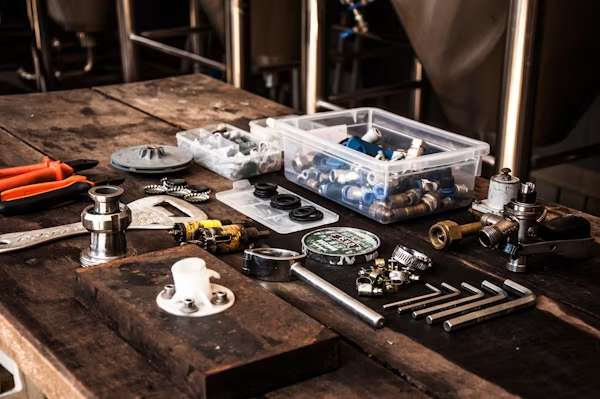
In ordinary standard English, equipment is a mass or noncount noun. Cambridge Dictionary describes equipment as the set of things needed for a particular purpose and explicitly treats it as uncountable. Oxford’s learner entry gives natural examples such as office equipment and a piece of medical equipment.
That means these are standard:
- The equipment is expensive.
- We bought some new equipment.
- She checked every piece of equipment.
- The lab received five new devices.
- The team packed three bags of climbing gear.
These are best avoided in general edited English:
- The equipments are expensive.
- We bought an equipment.
- She checked two equipments.
The distinction is about grammar, not physical countability. You can plainly count a drill, a helmet, and a ladder. English simply groups those objects under the mass noun equipment. The same pattern appears with furniture, luggage, information, and advice. We count chairs, bags, facts, and suggestions, but we normally do not write furnitures, luggages, informations, or advices.
How to count equipment correctly
Choose a unit that suits the context:
| Intended meaning | Natural wording |
| One unspecified item | a piece of equipment |
| Several unspecified items | three pieces of equipment |
| Separate machines | three machines |
| Separate handheld objects | three tools or devices |
| Categories | three types of equipment |
| Complete grouped sets | three equipment kits or sets |
“We installed three pieces of equipment” is grammatically sound but slightly vague. A strong business or technical document names the objects when possible: “We installed a compressor, an air dryer, and a filtration unit.” Precision improves both comprehension and search relevance.
Equipment, Equip, Equipped, and Equipping
The word family is easier to manage when each member has a clear role.
| Word | Part of speech | Meaning | Example |
| equip | verb | provide what is needed | We equip each van with safety gear. |
| equipment | noun | the things provided for a purpose | The safety equipment passed inspection. |
| equipped | verb/adjective | provided with necessary items | The van is fully equipped. |
| equipping | verb/gerund | the act of providing items | Equipping the new lab took a week. |
Notice the spelling change. The final p doubles in equipped and equipping, but not in equipment. This is a useful example of why related words can help memory only when you also know how suffixes behave.
Use this mini-sequence to reinforce all four forms:
We equip the crew. The crew is equipped. We are equipping another vehicle. All equipment is recorded in the inventory.
What Does Equipment Mean?
Equipment generally means the tools, machines, clothing, supplies, or other resources needed for a purpose or activity. Merriam-Webster’s entry includes implements used in an operation or activity, certain business assets, and railway rolling stock. Context decides how broad the word is.
Consider the range:
- Sports equipment: balls, bats, rackets, helmets, nets
- Medical equipment: patient monitors, infusion pumps, scanners, ventilators
- Construction equipment: excavators, loaders, compactors, lifts
- Office equipment: printers, scanners, shredders, telephone systems
- Computer equipment: monitors, servers, routers, storage devices
- Safety equipment: gloves, goggles, respirators, harnesses
- Camping equipment: tents, stoves, sleeping bags, headlamps
- Photography equipment: cameras, lenses, tripods, lights
The word can refer to one collective set or an entire category. “The equipment arrived” may describe a single machine in context, but “a piece of equipment arrived” removes ambiguity.
Equipment compared with gear, tools, apparatus, and machinery
These words overlap, but they are not identical.
| Term | Typical scope | Tone or setting | Example |
| equipment | broad collective resources for a purpose | neutral; nearly any field | laboratory equipment |
| gear | equipment and sometimes clothing | informal or activity-based | hiking gear |
| tool | an item used to perform a task | specific and countable | a measuring tool |
| apparatus | a device or organized set of devices | formal, scientific, medical | breathing apparatus |
| machinery | machines considered collectively | industrial or mechanical | factory machinery |
| device | a particular object designed for a function | countable, technical | a monitoring device |
Merriam-Webster defines a tool in one primary sense as a handheld item that helps accomplish a task, while its apparatus entry covers a set of materials or equipment designed for a use. Equipment is the flexible umbrella term; the alternatives can supply greater detail.
Correct Examples in Real-World Writing
Learning a spelling in isolation is useful. Seeing it work in realistic sentences makes it easier to retrieve under pressure.
School and academic writing
- The science teacher inspected the laboratory equipment before the experiment.
- Students must return all borrowed equipment by Friday.
- The grant will fund new audio recording equipment for the media department.
- Each piece of equipment was labeled with an identification number.
Academic writers should avoid vague claims such as “the equipment was good.” State the measurable quality: calibrated, sterile, functional, energy-efficient, or suitable for the method.
Workplace emails
- Please confirm that the conference-room equipment is ready for tomorrow’s presentation.
- Two pieces of equipment require preventive maintenance.
- The replacement equipment should arrive on 18 August.
- Could you send the model and serial number for each device?
The last example shows a useful editing move: introduce the collective category, then switch to a countable noun when requesting item-level data.
Construction and trade writing
- Operators must complete a pre-use inspection of heavy equipment.
- Personal protective equipment is required inside the marked work zone.
- The subcontractor is responsible for securing tools and equipment overnight.
- Damaged lifting equipment must be removed from service and reported.
Safety documents should name exact requirements whenever possible. “Wear protective equipment” is less useful than “wear a hard hat, eye protection, high-visibility vest, gloves, and safety footwear.”
Healthcare writing
- Biomedical staff tested the medical equipment after installation.
- Clean each piece of reusable equipment according to the manufacturer’s instructions.
- Emergency equipment must remain accessible at all times.
- The clinic purchased two ultrasound systems and four patient monitors.
In clinical contexts, ambiguity can create risk. Use the broad noun for the category and precise device names for procedures, training, maintenance, and incident reporting.
E-commerce and product pages
- Essential home gym equipment for small spaces
- Commercial kitchen equipment for cafés and bakeries
- Used landscaping equipment with service records
- Photography equipment cases with padded dividers
Correct spelling protects credibility. A typo in a product title, category label, invoice, or paid advertisement can make a legitimate seller look careless. Search engines often understand common misspellings, but that is not a reason to publish them. Use the standard form in titles, headings, body copy, image alt text, navigation, and structured product data.
A Practical Five-Minute Spelling Lesson
If the word repeatedly gives you trouble, use a short retrieval routine. It is more useful than staring at the correct form for five minutes.
Minute 1: Notice the structure
Write:
equip + ment = equipment
Circle the final p in equip and the opening m in ment. That boundary is where equitment, equippment, and equiptment tend to develop.
Minute 2: Copy accurately
Write equipment three times while saying each letter quietly. Accuracy matters more than speed. Check each copy against the model before continuing.
Minute 3: Retrieve without looking
Cover the word. Write it from memory twice. If either attempt is wrong, compare letter by letter and identify the exact failure. “I missed the u” is more actionable than “I am bad at spelling.”
Minute 4: Use it in context
Write one sentence connected to your life:
- My camera equipment is stored in the blue case.
- We need new safety equipment at work.
- The school bought music equipment for the auditorium.
Personal relevance makes the memory cue easier to recall.
Minute 5: Test the related forms
Write equip, equipment, equipped, and equipping. Underline the single p in the noun and the double p in the last two verb forms.
Test yourself again the next day and a few days later. If the spelling returns quickly, you have learned it. If not, repeat the retrieval step rather than merely rereading the page.
Editing and Proofreading Tips for Equipment
Spellcheckers catch many errors, but human review still matters. A typo can become a different valid word, a brand name, or a field-specific term that software does not flag. Autocorrect may also replace text without teaching the pattern.
Use this proofreading sequence:
- Search the document for equip. This finds equipment, equipped, equipping, and several likely errors.
- Check each noun against equip + ment.
- Search for equipments and revise it unless a direct quotation, proper name, or unusual specialist convention requires preservation.
- Check nearby verbs. Use “equipment is,” not “equipment are,” in standard collective use.
- Replace vague instances with countable terms where readers need item-level detail.
For a shared website, add common errors to the content team’s quality-control list. A content management system, browser extension, Microsoft Word, Google Docs, Grammarly, or LanguageTool can assist, but an approved glossary gives every writer the same answer.
A useful content-team style entry
equipment — nine letters; use as an uncountable noun. Write a piece of equipment, items of equipment, or name the individual tools or machines. Do not use equiptment, equipement, or equipments in standard copy.
That single entry prevents spelling, number, and agreement errors at once.
American English and British English Spelling
Some words change across major English varieties: color/colour, center/centre, and organize/organise are familiar examples. Equipment does not change. It is spelled the same way in standard American and British English.
Pronunciation can vary by speaker, region, and pace, but the written form stays stable. Writers preparing content for the United States, United Kingdom, Canada, Australia, New Zealand, Pakistan, India, the United Arab Emirates, or other English-using markets can keep equipment unchanged.
Local editorial choices still affect surrounding vocabulary. A US seller may list soccer equipment, while a UK seller is more likely to use football equipment. The target activity changes; the spelling of the head noun does not.
Professional Situations Where the Spelling Matters
One misspelled word rarely causes a disaster, but repeated errors can weaken trust. The stakes depend on the document.
Résumés and job applications
A candidate may write “operated warehouse equipment,” “maintained diagnostic equipment,” or “tracked IT equipment.” The spelling must be clean because employers use these documents to judge attention to detail. A trade résumé should go further and name the relevant systems or machines.
Inventory and asset records
Consistent labels make reports easier to search, filter, and audit. If one department uses equipment, another uses equipments, and a third uses equiptment, keyword searches may miss records. Standard terminology supports data quality.
Safety and compliance documents
Training material must be easy to interpret. Correct language cannot replace accurate procedures, but careless wording adds avoidable friction. Use the full term on first mention—such as personal protective equipment (PPE)—and apply the abbreviation consistently afterward.
Contracts and procurement
“Equipment” can cover a broad class of assets. A purchase order, lease, insurance schedule, or service agreement should define what it includes. Attach serial numbers, model numbers, quantities, specifications, and condition notes when the distinction has financial or legal consequences.
SEO and digital publishing
The query how do you spell equipment usually signals a need for a fast, trustworthy correction. A strong page places the answer before any history or grammar lesson. It then addresses adjacent questions so the visitor does not need another search.
A Small Case Study: Fixing an Equipment Category Page
Imagine a regional supplier whose website uses three category labels: “Safety Equipments,” “Safety Equiptment,” and “Safety Equipment.” Customers can still guess the meaning, but the site looks inconsistent. Internal search produces split results, analytics reports fragment the category, and staff copy the errors into quotations.
The correction process is straightforward:
- Select Safety Equipment as the approved label.
- Update navigation, page titles, headings, product breadcrumbs, filters, image alt text, and internal links.
- Redirect any retired misspelled URLs to the correct category URL.
- Keep misspellings out of visible copy; if search data shows users typing them, handle those variants inside the site’s search system.
- Add the approved term to the editorial glossary and product-import template.
The fresh insight here is that spelling consistency is not just cosmetic. In structured business systems, one variant can become several category values. Correcting the source field is better than repairing each report later.
Advanced Language Notes Without the Jargon
The suffix -ment commonly turns a verb into a noun connected with an action, process, state, or result. Compare:
- develop → development
- employ → employment
- achieve → achievement
- arrange → arrangement
- equip → equipment
This family resemblance helps with the ending, but English word formation is not perfectly mechanical. Equipment has become a conventional collective noun, and everyday grammar treats it differently from countable nouns such as tool, machine, and device.
The history also gives useful context. Oxford traces the noun through French, while Merriam-Webster traces the verb equip through Anglo-French forms associated with loading or fitting out a ship. English borrowed and adapted the family over centuries. Etymology explains where a form came from; present-day dictionaries tell us how competent speakers now spell and use it.
There is a minor source difference in dating. Merriam-Webster gives a first known use of equipment in 1600, while the Oxford English Dictionary’s public entry summary places its earliest known evidence in the early 1700s. That does not change the modern spelling. Historical dictionaries may use different corpora, senses, or evidence standards, so a responsible writer reports the difference instead of forcing false agreement.
Fast Answers to Related Questions
How many letters are in equipment?
There are nine letters in equipment: E, Q, U, I, P, M, E, N, T.
How many syllables are in equipment?
It is commonly pronounced with three syllables: e-quip-ment. The middle syllable carries the main stress.
Is there a double p in equipment?
No. Equipment has one p. The related forms equipped and equipping have a double p.
Does equipment have an e after the p?
No. Write equip directly before ment: E-Q-U-I-P-M-E-N-T.
Is equipment singular or plural?
It is normally an uncountable noun with singular agreement: “The equipment is ready.” The same form can refer collectively to one item or many items.
Can I say a piece of equipment?
Yes. “A piece of equipment” is the standard way to refer to one unspecified item. If the identity matters, name it: a drill, scanner, router, helmet, or camera.
Final Spelling Check
When someone asks how to spell equipment, give the answer first: E-Q-U-I-P-M-E-N-T.
Then remember the compact rule:
Keep every letter in equip, add ment, and stop.
That rule blocks the most common errors. There is no extra t in the middle, no extra e after the p, and no doubled p. For standard plural meaning, keep the same uncountable form or write pieces of equipment.
Use the word once in a sentence, test yourself without looking, and check it again tomorrow. That is enough to turn a word you repeatedly search into one you can write confidently.
Frequently Asked Questions
What is the correct spelling: equipment or equiptment?
Equipment is correct. It is formed from equip + ment. Equiptment wrongly inserts a t before the suffix.
What is the right spelling of equipment in English?
The correct spelling of equipment is E-Q-U-I-P-M-E-N-T. American and British English use the same spelling.
Why do people spell equipment as equitment?
Some speakers do not hear the p clearly at normal conversational speed. Remembering the complete base verb equip prevents the omission.
Is equipments grammatically correct?
In normal edited English, use equipment as an uncountable noun. Say “some equipment,” “two pieces of equipment,” or name the two objects. Rare specialist or nonstandard uses may appear, but they should not guide general writing.
What is the plural of equipment?
The plural of equipment is expressed with the unchanged mass noun equipment or a counting phrase such as pieces of equipment. For example: “All the equipment is insured” or “Five pieces of equipment are insured.”
How do I remember equipment spelling?
Use the word equation equip + ment = equipment. The equipment spelling becomes easier when you protect the five-letter base equip and attach the familiar four-letter ending ment.
How is equipment pronounced?
Say it roughly as ih-KWIP-muhnt, with stress on quip. Pronunciation varies slightly by accent, but the spelling is fixed.
Is equipment a noun or a verb?
Equipment is a noun. Equip is the related verb. You equip a room with equipment, and afterward the room is equipped.
Can equipment refer to one object?
Yes, context may allow it, but “a piece of equipment” or the object’s specific name is usually clearer. Avoid “an equipment” in standard English.
Which sentence is correct: the equipment is or the equipment are?
Use “the equipment is” because the noun normally takes singular agreement. If you switch to a plural count noun, write “the machines are” or “the pieces of equipment are.”