
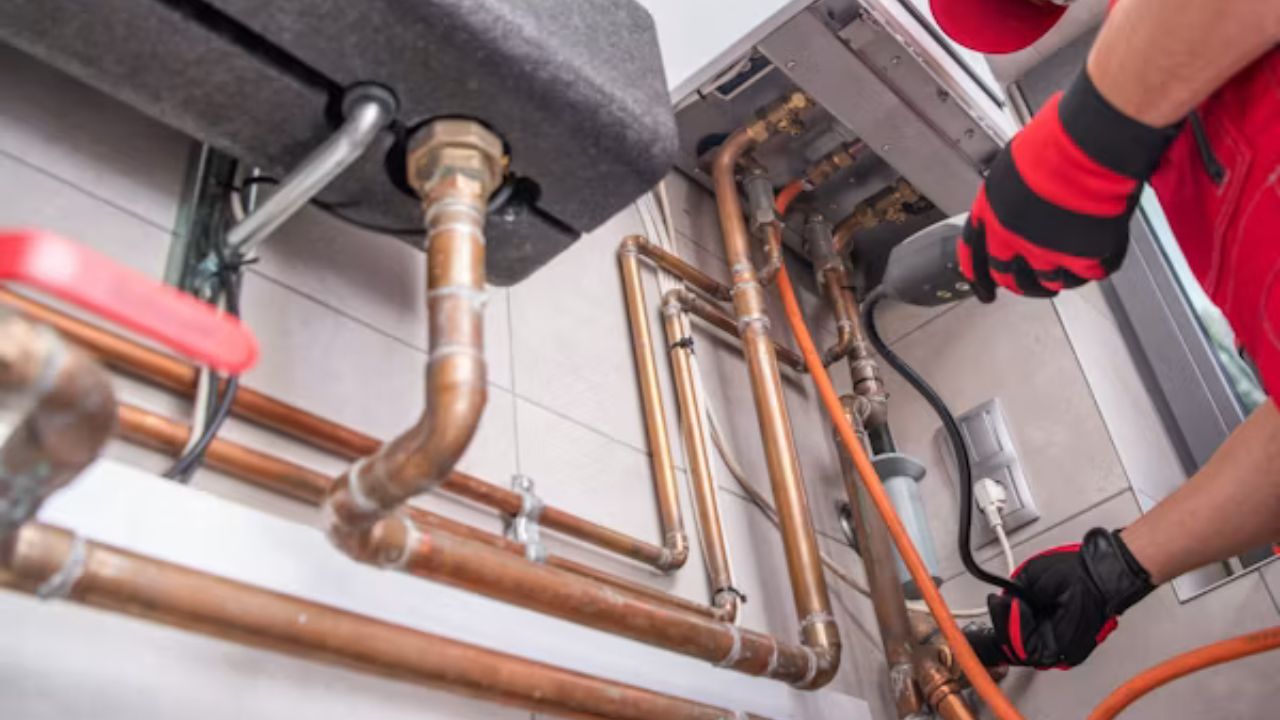
Quick Answer: Why Is PEX Plumbing Bad?
People ask why is PEX plumbing bad because the material has limitations that are easy to overlook during a fast or low-cost installation. PEX can be damaged by ultraviolet light, excessive heat, certain chemicals, rodents, and careless workmanship. Its fittings may restrict flow or leak when they are improperly installed, and some homeowners dislike the possibility of taste, odor, or chemical migration from plastic piping.
That does not mean every PEX system is unsafe or destined to fail. Certified tubing installed according to its listing, local plumbing code, and manufacturer instructions can provide decades of reliable service. Most serious problems are connected to unsuitable products, incompatible components, environmental exposure, or installation mistakes—not simply the fact that the pipe is PEX.
The practical answer is this: PEX is a useful plumbing material with less tolerance for certain conditions than many buyers realize. It is a poor choice when it will be exposed to sunlight, petroleum products, uncontrolled high temperatures, aggressive pest activity, or installers who mix unapproved parts.
What Is PEX Plumbing?
PEX stands for cross-linked polyethylene. It is a flexible plastic tubing used for hot- and cold-water distribution, radiant heating, snow-melting systems, and some water-service applications.
Cross-linking changes the structure of polyethylene so the finished tubing can tolerate more pressure and heat than ordinary polyethylene pipe. PEX is commonly sold in red, blue, white, or natural colors. The color usually identifies the intended water line; it does not automatically indicate a different performance rating.
Residential tubing is generally grouped by manufacturing method:
| PEX type | Manufacturing method | Common characteristics |
|---|---|---|
| PEX-A | Peroxide method | Highly flexible, strong shape memory, often used with expansion fittings |
| PEX-B | Silane or moisture-cure method | Stiffer, widely available, often used with crimp or clamp fittings |
| PEX-C | Electron-beam method | Usually less flexible and less common in residential projects |
| PEX-AL-PEX | PEX with an aluminum layer | Holds its shape and limits oxygen diffusion; often used in heating applications |
The letters describe the manufacturing method, not a universal best-to-worst quality ranking. A listed PEX-B product can be better suited to a particular project than an improperly specified PEX-A product.
PEX became popular because long flexible runs require fewer elbows and couplings than rigid piping. Installers can route it through joist spaces, around obstacles, and into manifold systems with less cutting and soldering. This reduces labor and lowers the number of concealed joints.
Those advantages explain why PEX is now common in new homes and renovation projects. They do not erase its weaknesses.
The 10 Real Disadvantages of PEX Plumbing
1. Sunlight and UV Exposure Can Damage It
One of the clearest PEX plumbing disadvantages is sensitivity to ultraviolet radiation. Direct sunlight can degrade stabilizers within the tubing and weaken its resistance to long-term pressure and chlorine exposure.
This problem is not limited to a finished pipe deliberately installed outdoors. Damage can begin while coils are stored on an uncovered jobsite, transported in an open truck, or left near windows during a delayed construction project.
The Plastic Pipe Institute advises installers to follow the manufacturer’s stated exposure limits and explains that artificial light sources may also require consideration. Its technical material warns that PEX should not be installed outdoors where it remains exposed to sunlight. See the PPI PEX Plumbing Design and Installation Guide.
UV damage is especially troublesome because the pipe may look normal after harmful exposure. A homeowner buying a recently completed house may have no way to know that coils sat outdoors for weeks before installation.
Good practice includes:
- Keeping tubing in its original packaging
- Storing it under an opaque cover
- Recording delivery and installation dates
- Following the brand’s maximum allowable UV-exposure time
- Protecting pipe near windows, skylights, and certain artificial light sources
- Rejecting tubing with an unknown storage history
PEX should not be painted or wrapped with an arbitrary product merely to solve sunlight exposure. Paints, tapes, adhesives, foams, and coatings can contain chemicals that are incompatible with the tubing.
2. Fittings Create Potential Failure Points
The tubing itself is only one part of a PEX system. A completed installation may include plastic or brass fittings, copper crimp rings, stainless-steel clamps, expansion sleeves, manifolds, transition adapters, valves, and stub-outs.
Many reported common PEX plumbing problems begin at these connections. A ring installed too close to the tubing edge can slip. A crooked fitting can create uneven compression. An expansion joint can leak if the wrong tool head, sleeve, fitting, or installation sequence is used. A shallow insertion leaves less sealing surface than the system requires.
Connection methods are not automatically interchangeable. ASTM F1807 crimp fittings, ASTM F1960 cold-expansion fittings, ASTM F2080 compression-sleeve fittings, and ASTM F2159 plastic fittings represent different systems and requirements. A component that physically fits may not be approved as part of the installed assembly.
Older brass fittings have also been associated with dezincification under certain water conditions. Dezincification occurs when zinc selectively leaves a brass alloy, creating a weakened, porous fitting. Modern dezincification-resistant alloys are intended to reduce this risk, but buyers should still confirm product listings and compatibility.
A professional installer should:
- Use a complete listed system or an explicitly approved combination.
- Calibrate crimp tools as required.
- Check every crimp with the specified go/no-go gauge.
- Make square cuts with a proper tubing cutter.
- Inspect fittings for complete insertion.
- Pressure-test the system before concealing it.
- Keep photos of joints that will be hidden.
A flexible tube cannot compensate for a bad connection.
3. Chlorinated Water and Heat Affect Long-Term Performance
Disinfectants protect public drinking water, but long-term exposure to chlorine can oxidize some polymer materials. The speed of degradation depends on water temperature, pressure, disinfectant concentration, flow pattern, tubing formulation, and installation design.
This is one reason PEX pipe failure cannot be described with a single expected age. A cold-water line in a moderate environment does not experience the same stress as a continuously circulating hot-water loop.
PEX markings include a material designation code. According to the Plastic Pipe Institute, the first digit relates to chlorine resistance, while the second relates to UV resistance. PPI’s current guide to PEX chlorine-resistance ratings explains how those ratings are intended to help designers and installers match tubing to an application.
Hot-water recirculation deserves special attention. Continuously moving hot water can expose tubing to more demanding conditions than occasional household use. The selected product must be listed for the operating temperature, pressure, disinfectant conditions, and recirculation pattern.
Warning signs can include:
- Repeated pinhole leaks along the tube
- Surface cracking or brittleness
- Discoloration near hot-water equipment
- Failures concentrated in a recirculation loop
- Multiple leaks without visible mechanical damage
One leak at a fitting usually suggests a localized connection problem. Repeated splits along the pipe call for a broader investigation involving water chemistry, heat exposure, pressure, UV history, and product identification.
4. PEX Cannot Be Used Everywhere
PEX is approved by many model plumbing codes and local jurisdictions, but approval is not permission to place it anywhere.
A product must be listed for its specific use. Potable-water PEX is not automatically approved for every hydronic, fire-protection, compressed-air, gas, steam, or outdoor application. Local amendments can also impose rules beyond the model code.
Some code paths restrict plastic tubing near water-heater connections. For example, certain Uniform Plumbing Code applications require an approved metallic transition before PEX begins. An ICC Evaluation Service report states that, in UPC jurisdictions covered by that report, PEX must not be installed within the first 18 inches of piping connected to a water heater.
Requirements may vary by heater type, jurisdiction, listing, and installation method. The correct approach is to check:
- The locally adopted plumbing code
- State or provincial amendments
- The tubing’s listing
- The water-heater manufacturer’s instructions
- The PEX manufacturer’s installation manual
- Permit and inspection requirements
Internet diagrams cannot settle a local code question. The authority having jurisdiction—the building or plumbing department responsible for enforcement—has the final say.
5. Rodents Can Chew Through the Tubing
Rodents can damage many building products, including electrical insulation, drain hoses, flexible water connectors, and plastic pipe. PEX is not uniquely attractive as food, but it is soft enough to be punctured by persistent gnawing.
This risk is greater in crawl spaces, attics, farm buildings, vacant properties, and houses with known mouse or rat activity. A small tooth puncture can release water continuously until someone notices staining, reduced pressure, or a high water bill.
Rodent damage is sometimes blamed on defective tubing even when tooth marks surround the opening. A proper failure inspection should distinguish gnawing from splitting, abrasion, chemical attack, freezing, and fitting failure.
Risk-reduction measures include:
- Sealing gaps around utility penetrations
- Repairing damaged vents and crawl-space screens
- Removing accessible food and nesting material
- Using protective sleeves in vulnerable passages
- Avoiding loose tubing laid across pest travel routes
- Fixing infestations before installing new pipe
- Installing automatic leak detection and shutoff equipment
Metal pipe is more resistant to rodent teeth, although exposed insulation and nearby wiring can still be damaged. In a building with ongoing pest activity, that difference may justify copper in the most vulnerable areas.
6. Chemicals Can Harm PEX
PEX should not contact every product commonly found on a construction site. Petroleum-based materials, solvents, pesticides, some firestop compounds, certain spray foams, pipe dopes, adhesives, and contaminated soil may affect particular tubing formulations.
Chemical compatibility is brand- and product-specific. A spray foam that is acceptable for one PEX system should not be assumed safe for another. The same caution applies to leak-detection fluids, antimicrobial treatments, lubricants, tapes, sealants, and cleaning products.
This issue helps explain PEX plumbing health concerns found in homeowner discussions. People sometimes combine three separate questions:
- Can an outside chemical damage the pipe?
- Can compounds migrate from the pipe into water?
- Does certification mean that no compound is detectable?
These are not the same question. Damage from an incompatible construction chemical is a material-performance issue. Migration testing is a drinking-water safety issue. Certification evaluates products against defined health-effect requirements; it does not claim that absolutely nothing can ever be measured in the water.
Before allowing another trade to spray, coat, glue, or treat an area containing PEX, obtain written compatibility information from the tubing manufacturer. “Safe for plastics” is too broad.
7. Taste and Odor Complaints Can Occur
New plastic plumbing can temporarily affect the taste or odor of water. The experience varies with product formulation, water chemistry, stagnation time, temperature, and household sensitivity.
A plastic-like smell does not, by itself, prove that the water is unsafe. It should not be dismissed either. Persistent taste or odor deserves a methodical response:
- Determine whether the issue affects hot water, cold water, or both.
- Compare first-draw water with water after flushing.
- Check whether every fixture is affected.
- Confirm that the tubing carries the required potable-water certification.
- Inspect for cross-connections or contaminated hoses.
- Ask the water supplier whether source-water treatment changed.
- Use an accredited laboratory if the problem continues.
NSF explains that virtually every material in contact with drinking water can release some substances. The relevant question is whether extraction levels meet health-based requirements. NSF/ANSI/CAN 61 evaluates the health effects of drinking-water system components, including PEX. The organization provides a useful FAQ about PEX product safety.
Avoid treating odor as a diagnosis. Sulfur smells, bacterial activity in a water heater, stagnant branches, rubber connectors, well contamination, and source-water changes can all produce unpleasant water.
8. Poor Support and Abrasion Can Wear the Pipe
PEX moves as temperature changes. If it passes through a sharp metal opening, rests against an abrasive edge, or rubs against a fastener, repeated movement can gradually damage the tube.
This form of PEX tubing damage is preventable. Protective grommets, sleeves, bend supports, nail plates, and correctly spaced hangers allow the pipe to expand and contract without scraping against the structure.
Installation quality matters at bends as well. Forcing tubing into a radius tighter than the manufacturer permits can flatten or kink it. A kinked section may need to be cut out, repaired with an approved coupling, or restored through a manufacturer-approved method. The correct remedy depends on the PEX type and brand.
Other mechanical risks include:
- Drywall screws penetrating hidden lines
- Nails driven through unprotected studs
- Tubing pulled tightly across truss plates
- Unsupported vertical runs
- Pipe pressed against hot flues or recessed lights
- Excessive tension at fittings
- Concrete placement damaging unprotected tubing
- Sharp cable ties cutting into the surface
A pressure test can identify a puncture that already passes through the wall, but it may not reveal shallow abrasion that becomes a leak years later.
9. PEX Has Temperature and Pressure Limits
PEX is designed for rated combinations of temperature and pressure. It is not suitable for steam, uncontrolled boiler conditions, direct contact with a flue, or temperatures beyond its listing.
A water heater with malfunctioning controls can expose the plumbing system to unusually hot water. So can incorrectly designed solar thermal equipment, solid-fuel boilers, or hydronic systems lacking proper safeguards.
Pressure also matters. High static water pressure stresses tubing, fittings, appliance hoses, faucets, and valves. Installing PEX does not solve an existing pressure problem. Homes with excessive supply pressure may require a pressure-reducing valve and thermal-expansion control.
The most useful diagnostic measurements are:
- Static pressure with no fixtures operating
- Flowing pressure during demand
- Maximum overnight pressure
- Hot-water temperature
- Thermal-expansion behavior after heating
- Recirculation-loop temperature and runtime
A cheap pressure gauge with a maximum-reading hand can reveal overnight spikes that a quick daytime test misses.
10. Workmanship Can Be Difficult to Evaluate Later
PEX is easy to route, which is both an advantage and a weakness. It can encourage rushed work by people who mistake flexibility for freedom from design rules.
Loose coils, unsupported runs, sharp bends, mixed fittings, hidden joints, missing nail plates, and confusing routing may remain concealed behind finished walls. Future contractors may struggle to identify which line serves each fixture.
A home-run manifold system can make isolation and maintenance easier. A poorly labeled manifold creates a different problem: rows of similar tubing with no dependable record of their destinations.
Before walls close, the owner should request:
- Wide-angle photographs of every wall and ceiling
- Close-ups of fittings and transitions
- Product labels and tubing markings
- Pressure-test results
- Permit and inspection records
- A manifold schedule
- Warranty documents
- Receipts identifying the fitting system
These records may be more useful ten years later than the small labor saving achieved by rushing the rough-in.
Is PEX Plumbing Safe for Drinking Water?

Certified PEX is widely used for potable-water distribution. Buyers should look for products evaluated to relevant standards, including NSF/ANSI/CAN 61 for health effects and NSF/ANSI/CAN 372 for lead-content compliance where applicable.
NSF states that NSF/ANSI/CAN 61 applies to drinking-water components regardless of material type. It requires potential extractants to be identified and evaluates measured concentrations against established criteria. Certification applies to a particular product and use—not every tube made from a vaguely similar material. See NSF’s explanation of how the standard applies to PEX.
This distinction matters. “PEX is certified” is too broad. A homeowner should ask whether the exact manufacturer, product line, size, temperature application, and fittings have the appropriate listing.
The second appearance of PEX plumbing health concerns often comes from research detecting organic compounds in water after contact with new tubing. Detection alone does not establish a health risk. Modern laboratory equipment can identify extremely small concentrations. Risk assessment must consider the chemical identity, concentration, exposure duration, toxicological threshold, and changes over time.
A cautious homeowner can take sensible steps without assuming that all plastic pipe is dangerous:
- Buy traceable, certified products from reputable suppliers.
- Flush new systems according to the manufacturer’s instructions.
- Avoid using hot tap water for cooking or drinking.
- Flush water that has remained stagnant for an extended period.
- Investigate persistent odor or taste.
- Test private-well water at appropriate intervals.
- Never use unlisted tubing for potable water.
People with a specific medical vulnerability should discuss drinking-water concerns with a qualified healthcare professional and use an accredited laboratory for testing. A social-media post or home test strip cannot provide a complete exposure assessment.
Does PEX Leach Chemicals Into Water?
All plumbing materials interact with water to some degree. Copper can release copper under corrosive conditions. Brass can contribute metals. Elastomer seals, coatings, adhesives, and plastic materials may release organic or inorganic substances.
The more useful question is not “Can anything be detected?” It is “Does the complete product meet the applicable health-effects standard under defined test conditions?”
This is where is PEX plumbing safe becomes a product-specific question. Certification, manufacturing quality, water chemistry, temperature, stagnation, installation contamination, and system age all matter.
Research findings should be interpreted carefully. A laboratory experiment using a short piece of new pipe under controlled conditions may help identify potential extractants, but it does not automatically describe exposure in every occupied home. At the same time, certification should not be treated as a substitute for correct installation or an investigation of unusual water quality.
If a homeowner wants testing, the process should begin with a clear objective. “Test for everything” is rarely practical. An accredited laboratory may recommend:
- Volatile organic compound analysis
- Semi-volatile organic compound analysis
- Metals testing
- Basic water chemistry
- Disinfectant residual
- Microbiological testing
- Comparison of first-draw and flushed samples
Samples should be collected using the laboratory’s containers and instructions. Improvised jars or incorrect holding times can invalidate results.
Common PEX Failure Patterns and What They Suggest
Not every leak has the same cause. Its location and appearance provide valuable clues.
| Failure pattern | Possible causes | Useful next step |
|---|---|---|
| Leak directly at a fitting | Bad crimp, incomplete insertion, incompatible parts, fitting defect | Preserve the joint and inspect the connection method |
| Long split in the tube | Freezing, excessive pressure, heat damage, manufacturing issue | Measure pressure and temperature; examine the fracture |
| Small paired punctures | Rodent teeth or mechanical damage | Look for gnaw marks and pest evidence |
| Wear mark on one side | Abrasion against wood, metal, or fastener | Inspect the contact point and nearby runs |
| Brittle or cracked surface | UV, oxidation, chemical exposure, heat | Review storage history and environmental contact |
| Repeated hot-loop failures | Temperature, recirculation, disinfectant exposure, unsuitable rating | Review design and product designation |
| Green or white deposits at brass | Water chemistry, corrosion, dezincification | Identify alloy and test water chemistry |
| Sudden leak after wall work | Screw, nail, drill, or saw damage | Inspect the precise penetration location |
A damaged section should not be discarded before the cause is understood. Keep the failed pipe, fittings, rings, labels, and photographs. Mark the direction of flow and the installed orientation. If insurance, warranty, or product liability may be involved, avoid destructive testing until the relevant parties have been notified.
Installation Errors That Make PEX Look Worse Than It Is
Many common PEX plumbing problems are workmanship problems presented as material failures.
A few examples:
Mixing Brands Without Confirming Approval
Installers sometimes assume that a fitting, ring, sleeve, and tube can be combined because their nominal sizes match. Warranty and listing conditions may say otherwise.
Skipping Tool Calibration
Crimp tools can wear or drift out of adjustment. An attractive-looking connection may still fall outside the required dimensions.
Leaving Tubing in Sunlight
The installer may meet every visible connection rule while using tubing already degraded by poor storage.
Pulling PEX Too Tight
Tubing needs room for movement. Tension can transfer stress to fittings and create noise as pipe rubs against framing.
Placing Joints in Inaccessible Locations
PEX permits long runs, so unnecessary concealed couplings defeat one of its main advantages.
Ignoring Bend-Radius Rules
A sweeping bend may eliminate an elbow, but only when it stays within the specified minimum radius and does not place side load on a fitting.
Failing to Protect Pipe From Fasteners
Nail plates cost little compared with repairing a hidden pressurized line after cabinets, trim, or drywall are installed.
Using the Wrong Fitting Size Assumption
Insert fittings reduce the internal opening. A system copied directly from a copper layout may experience disappointing flow if the designer ignores pressure loss and simultaneous demand.
Good design uses the actual tubing and fitting data, not nominal size alone.
Does PEX Reduce Water Flow?
PEX tubing can provide good flow, especially when long bends replace multiple rigid elbows. Insert-style fittings, however, sit inside the tube and reduce the internal passage.
The effect depends on:
- Tube size
- Fitting system
- Number of fittings
- Run length
- Supply pressure
- Elevation
- Fixture demand
- Manifold design
- Simultaneous use
A trunk-and-branch system containing many small insert fittings can produce more pressure loss than expected. A carefully sized home-run system may perform very well.
This is an important competitor gap in many articles about problems with PEX pipes: they discuss material durability but ignore hydraulic design. A system can be leak-free and still be unsatisfactory if two showers cannot operate comfortably at the same time.
For a large home, high-flow shower, long rural service line, or multi-generational household, ask the designer for pressure-loss calculations. Upsizing selected trunks may cost less than correcting weak performance after finishes are complete.
PEX vs. Copper vs. CPVC
No plumbing material wins every comparison.
| Factor | PEX | Copper | CPVC |
|---|---|---|---|
| Material cost | Usually low to moderate | Usually high | Low to moderate |
| Installation labor | Low | High | Moderate |
| Flexibility | Excellent | Poor | Poor |
| Number of fittings | Often fewer | Often more | Often more |
| UV resistance | Poor | Excellent | Limited; verify product rules |
| Rodent resistance | Limited | Strong | Limited |
| Corrosion | Does not corrode like metal | Can pit or corrode | Does not corrode like metal |
| Heat tolerance | Application-limited | High | Application-limited |
| Freeze tolerance | Better than rigid pipe, but not freeze-proof | Can split | Can become brittle and split |
| Fire and smoke considerations | Combustible plastic | Noncombustible | Combustible plastic |
| Recycling and salvage value | Limited | High | Limited |
| Installation skill risk | Connection-specific | Soldering or press skill required | Solvent-welding technique required |
| Noise | Often quiet | Can transmit water noise | Generally quiet |
| Expected service | Product and condition dependent | Long under suitable water chemistry | Product and condition dependent |
When Copper May Be Better
Copper may justify its cost when:
- Pipe must remain exposed to sunlight.
- Rodent damage is a serious ongoing risk.
- Noncombustible material is preferred.
- The owner values recyclability and established long-term familiarity.
- Local trades have much stronger copper experience.
- The water chemistry is known to be compatible with copper.
Copper is not immune to failure. Aggressive water, excessive velocity, poor soldering, stray electrical current, flux residues, freezing, or thin-wall damage can cause leaks.
When CPVC May Be Better
CPVC is rigid, relatively affordable, and familiar in some regions. It may suit projects where local contractors have extensive experience with a particular listed system.
Its disadvantages include brittleness with age or temperature, sensitivity to some chemicals, solvent-weld workmanship requirements, and a greater number of fittings than a typical flexible PEX layout.
When PEX May Be Better
PEX is often attractive when:
- The renovation requires routing through tight framing.
- Labor cost is a major factor.
- A manifold system is desired.
- Fewer concealed fittings are a priority.
- The material will remain protected from UV and incompatible chemicals.
- A trained installer follows one documented system.
This balanced comparison is the best answer to why is PEX plumbing bad. It is “bad” when its limitations conflict with the building or when low-cost installation encourages shortcuts. It can be an excellent choice when the product, environment, design, and workmanship match.
Are PEX-A, PEX-B, and PEX-C Equally Reliable?
The manufacturing method affects flexibility, shape memory, available joining systems, and handling characteristics. It does not allow a blanket claim that every PEX-A product outlasts every PEX-B or PEX-C product.
PEX-A
PEX-A is usually the most flexible. It is commonly associated with cold-expansion connections and can often recover from certain kinks using a manufacturer-approved procedure. Its flexibility helps reduce fittings.
PEX-B
PEX-B is widely used with crimp, clamp, and other listed systems. It is often less flexible than PEX-A but can be cost-effective and durable. A kink generally requires the affected section to be cut out and repaired according to instructions.
PEX-C
PEX-C is less common in many residential markets. Characteristics vary by manufacturer, so buyers should focus on the specific listing, warranty, ratings, and installation instructions.
The second discussion of PEX pipe failure should therefore focus on the exact product rather than the letter alone. Ask for:
- ASTM standard markings
- NSF potable-water certification
- Pressure and temperature ratings
- Chlorine-resistance designation
- UV-exposure limit
- Manufacturing date or traceability code
- Approved fitting methods
- Written warranty terms
Brand reputation matters, but the label must still match the application.
Does PEX Burst When It Freezes?
PEX can expand more than rigid copper or CPVC, which may help it survive some freezing events. It is not freeze-proof.
A fitting, valve, manifold, or tightly restrained section can still fail. Repeated freezing can damage a system even if the first event produces no visible leak. Insulation slows heat loss but does not create heat.
The safest measures are familiar:
- Keep pipe inside the conditioned envelope where possible.
- Seal cold-air leaks near plumbing.
- Drain seasonal buildings correctly.
- Use listed heat-tracing products only when approved for the tubing.
- Maintain safe indoor temperatures.
- Protect outdoor faucets with proper shutoff and drainage arrangements.
- Do not rely on leaving a faucet dripping as the sole protection strategy.
When a frozen line thaws, inspect the full area—not only the first visible leak.
Can PEX Be Repaired?
Yes. A localized damaged section can often be removed and replaced with approved couplings and tubing.
The key is to determine why it failed. Repairing a rodent puncture without addressing the infestation invites another leak. Replacing a cracked hot-water section without checking temperature and pressure treats the symptom.
A typical repair process includes:
- Shut off the water.
- Relieve pressure.
- Document the failure before cutting.
- Remove enough tubing to reach undamaged material.
- Use a listed connection system.
- Support the repaired section.
- Pressure-test it.
- Check for secondary water damage.
- Correct the original cause.
Repeated leaks may justify partial or complete repiping. The decision should consider failure distribution, product history, accessibility, repair cost, insurance implications, and the likelihood that the same condition exists elsewhere.
Warning Signs Homeowners Should Not Ignore
Potential problems with PEX pipes are easier to manage when caught early.
Watch for:
- Unexplained increases in water consumption
- Damp drywall or flooring
- Musty odors
- Reduced water pressure
- Water sounds when no fixture is operating
- Corrosion or deposits around fittings
- Discolored water
- Persistent plastic, solvent, or fuel-like odor
- Staining beneath manifolds
- Repeated air in water lines
- Warm areas on a floor where no heating line should exist
- A water meter moving while every fixture is off
A smart leak detector can identify abnormal flow and close the main valve. Point sensors under water heaters, manifolds, sinks, dishwashers, and washing machines add another layer of protection.
Leak detection does not make bad piping safe. It reduces the amount of damage between failure and discovery.
How to Inspect PEX Before Buying a House
A standard home inspection is primarily visual and noninvasive. It cannot certify every concealed PEX joint. Buyers can still gather meaningful evidence.
Ask the inspector or plumber to check:
- Visible tubing markings
- Tubing brand and type
- Fitting materials and methods
- Signs of mixed systems
- UV exposure in unfinished spaces
- Abrasion at framing penetrations
- Missing supports or nail plates
- Manifold condition
- Water-heater transitions
- Pressure and temperature
- Evidence of earlier repairs
- Accessible permit records
- Active recalls or warranty notices tied to the exact product
Do not assume that red pipe is hot-rated, blue pipe is cold-rated, or white pipe is inferior. Read the printed markings.
If the property has a history of leaks, request invoices, insurance claims, remediation documents, laboratory findings, and the removed components if they still exist. Repeated failures are more important than one properly explained accidental puncture.
How to Reduce the Risks of PEX Plumbing
The best defense against PEX tubing damage is a disciplined installation.
Choose a Traceable Product
Buy through an established supplier. Confirm third-party certification and product markings. Avoid unmarked coils, marketplace bargains with uncertain origins, and leftover tubing with unknown outdoor exposure.
Keep the System Consistent
Use approved tubing, fittings, sleeves, rings, and tools. Obtain written confirmation before mixing components.
Protect It During Construction
Keep PEX away from sunlight, solvents, fuels, sharp metal, excessive heat, and careless foot traffic. Cap open ends to prevent contamination.
Use Fewer Concealed Joints
Flexible routing and manifolds can reduce fittings behind finished surfaces. Place necessary valves and transitions where they remain accessible.
Pressure-Test Before Closing Walls
Testing should follow local code and manufacturer instructions. A passed test is not a substitute for visual inspection, but both together are valuable.
Document Everything
Photographs, product labels, pressure readings, inspection approvals, and manifold schedules create a useful service record.
Control Water Pressure and Temperature
Test pressure under different conditions. Confirm the heater’s temperature setting, thermal-expansion control, and recirculation design.
Address Pest Activity
A plumbing upgrade should not proceed as though an active rodent problem is unrelated.
Install Leak Detection
Automatic shutoff equipment is particularly valuable in vacation homes, rental properties, finished basements, and homes with expensive flooring.
Is PEX Worth Using?
For many homes, yes. PEX can lower labor cost, reduce the number of joints, simplify retrofits, resist scale buildup, and perform reliably when protected and properly installed.
It is not the best option for every building. Copper may be a better investment where pipes will be exposed to sunlight, pests cannot be controlled, fire-performance goals favor metal, or the owner strongly prefers a nonplastic potable-water system.
The answer to is PEX plumbing safe depends on the exact system. Certified material, compatible fittings, correct design, careful handling, appropriate water conditions, and skilled workmanship form one package. Remove any part of that package and risk rises.
Homeowners should be cautious of two extreme claims:
- “PEX is plastic, so it is always dangerous.”
- “PEX is code-approved, so nothing can go wrong.”
Neither statement reflects how plumbing systems actually fail.
A Practical Decision Checklist
Choose PEX with confidence when you can answer yes to most of these questions:
- Is the exact tubing certified for potable water?
- Is it listed for the intended temperature and pressure?
- Has its UV-exposure history been controlled?
- Are the fittings and tools approved for the tubing?
- Is the installer trained in that joining method?
- Will the pipe remain separated from incompatible chemicals?
- Is the system protected from abrasion and fasteners?
- Are rodents under control?
- Have pressure and temperature been measured?
- Will the rough-in be photographed?
- Will the system be inspected and pressure-tested?
- Are warranty terms documented?
If several answers are unknown, pause before the walls are closed. That is the cheapest moment to correct a questionable installation.
Frequently Asked Questions
Why do some plumbers dislike PEX?
Some plumbers prefer copper because they trust its long field history, heat resistance, rigidity, recyclability, and resistance to rodents. Others have seen PEX systems fail because of poor connections, sunlight exposure, incompatible chemicals, defective components, or careless installation. Preference also reflects regional experience and available training.
What is the biggest disadvantage of PEX?
UV sensitivity is among the clearest PEX plumbing disadvantages because sunlight exposure can weaken tubing before or after installation. Reliance on system-specific fittings and tools is another major limitation. Workmanship must match the manufacturer’s instructions.
How long does PEX plumbing last?
A universal lifespan cannot be promised. Manufacturers may offer warranties measured in decades, but warranty length is not identical to real-world service life. Temperature, pressure, disinfectant exposure, UV history, chemical contact, fitting quality, and installation workmanship all affect longevity.
Is PEX banned in the United States?
PEX is not subject to a nationwide U.S. ban. It is recognized in widely used model codes, but state and local rules, approved uses, product listings, and installation restrictions vary. Check the currently adopted code and local amendments before starting work.
Is PEX safer than copper?
Neither material is automatically safer in every water system. Certified PEX is evaluated for drinking-water health effects. Copper has a long service history but can release copper or develop corrosion under unfavorable water chemistry. Product quality, water conditions, design, and installation determine the better choice.
Can bacteria grow inside PEX?
Biofilms can develop on many water-contact surfaces. Stagnation, water temperature, disinfectant residual, nutrient levels, dead legs, and building operation affect microbial growth. The pipe material is only one variable. Remove unused branches and manage water stagnation rather than relying on material choice alone.
Should PEX be replaced if it is not leaking?
Usually not based on material name alone. Replacement may be justified when the tubing is part of a documented defective system, has experienced excessive UV or chemical exposure, shows widespread deterioration, or has developed repeated unexplained leaks. A qualified plumber should identify the exact product and failure pattern first.
Are plastic PEX fittings bad?
Listed polymer fittings can perform well when used within their approved system. Their internal diameter may be smaller than the tubing, and incorrect installation can cause leaks. Brass fittings have their own corrosion considerations. The best fitting depends on the system, water chemistry, sizing, and installer competence.
Can PEX connect directly to a water heater?
Rules depend on the adopted code, heater instructions, tubing listing, and jurisdiction. Some UPC applications require a metallic connector or metallic piping for the first 18 inches. Confirm the requirement with the local code official and both manufacturers.
Does PEX affect home value?
PEX is common enough that a properly permitted and documented installation does not automatically reduce home value. Evidence of amateur work, mixed systems, repeated leaks, unpermitted repiping, or missing records can concern buyers and insurers.
Does homeowners insurance cover a PEX leak?
Coverage depends on the policy and cause. A policy may cover sudden resulting water damage while excluding the failed pipe itself, gradual leakage, poor maintenance, defective workmanship, or known damage. Review the actual policy and report incidents promptly.
What should I do if my PEX water tastes strange?
Compare hot and cold water, flush the affected line, identify whether every fixture is involved, verify product certification, and contact the installer or manufacturer. If the problem persists, ask an accredited water laboratory to recommend appropriate testing.
Final Verdict
PEX is not a bad plumbing material by definition. It is a condition-sensitive system.
Its real weaknesses are UV degradation, connection dependence, chemical incompatibility, rodent vulnerability, temperature and pressure limits, possible taste or odor complaints, and the consequences of careless installation. Those limitations deserve attention because most of the tubing disappears behind walls soon after it is installed.
A well-designed system made from certified products can be dependable and economical. A hurried system assembled from unverified parts can create expensive hidden problems.
Before choosing PEX, do not ask only what the pipe costs. Ask who made it, how it was stored, which fittings will be used, whether the complete assembly is listed, how pressure and heat will be controlled, and what evidence will remain after the walls close.
Those questions reveal far more about future reliability than the color of the tubing or the sales pitch printed on its packaging.