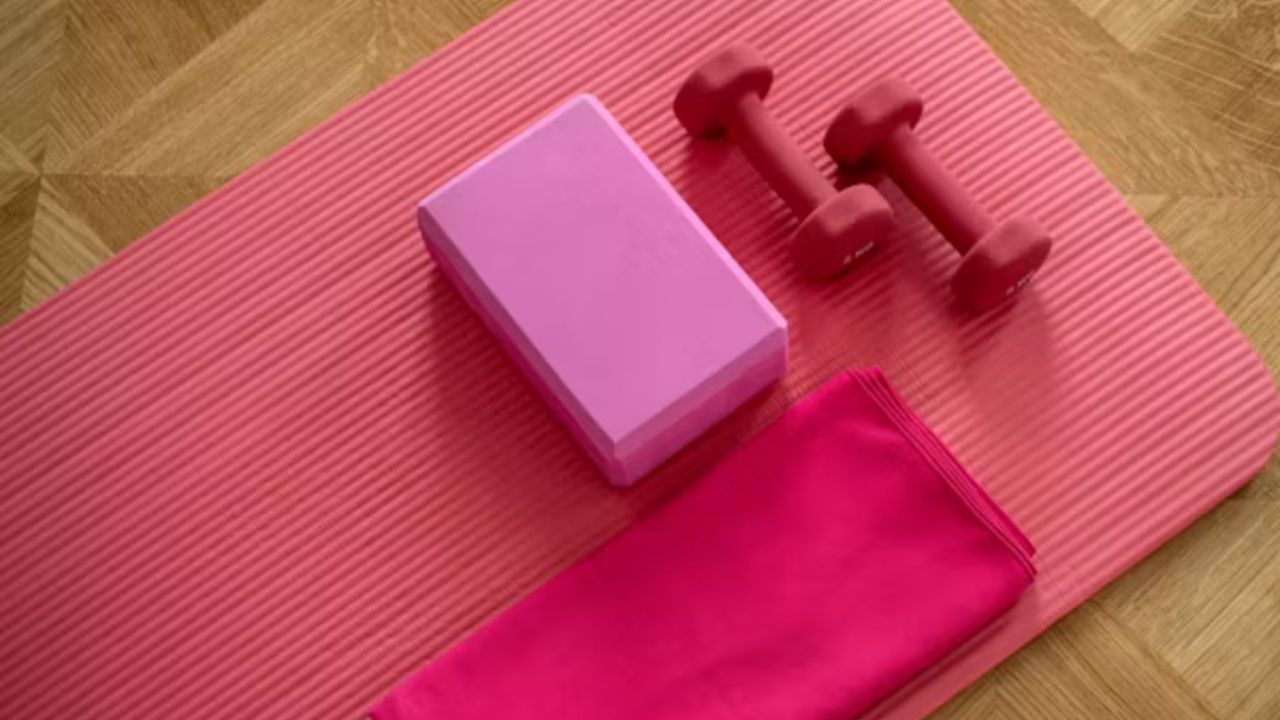
If you are wondering what equipment do you need for Pilates by Izzy, the good news is that you usually do not need a room full of specialist fitness gear to get started. For many mat-based Pilates workouts, a supportive exercise mat, comfortable clothing, and enough floor space are the most important essentials.
Some sessions may also make use of small Pilates accessories such as ankle weights, resistance bands, a Pilates ball, sliders, or light dumbbells. The exact equipment can vary from one workout to another, so it is sensible to check the individual class description before starting.
For a practical home setup, begin with the basics and add accessories only when your workouts require them.
Essential Equipment for Pilates by Izzy Workouts
For most home Pilates sessions, your setup can remain simple.
1. A Pilates or Exercise Mat
A mat is the most useful piece of equipment for floor-based Pilates.
Pilates includes exercises performed on your back, side, knees, forearms, and hands. A mat provides cushioning between your body and a hard floor while also giving you a more stable workout surface.
A Pilates mat is often slightly thicker than a traditional yoga mat, although you do not necessarily need to buy a dedicated Pilates version immediately.
Look for a mat that offers:
- Enough cushioning for your spine, knees, and hips
- A non-slip surface
- Enough length for you to lie comfortably
- Reasonable firmness so you do not sink into it
- Easy cleaning after workouts
Very soft gym mats can sometimes make balance exercises more difficult because they create an unstable surface.
2. Comfortable, Close-Fitting Workout Clothes
You do not need specialist Pilates clothing.
Wear clothes that allow you to move freely through movements such as leg lifts, bridges, planks, lunges, and abdominal exercises.
Close-fitting leggings, shorts, fitted tops, or similar activewear can be particularly practical because loose clothing may move around during exercises performed on your back or with your legs raised.
The most important consideration is unrestricted movement.
3. Enough Clear Floor Space
Your workout area should give you enough room to:
- Lie fully extended
- Stretch your arms overhead
- Move your legs to each side
- Perform planks safely
- Complete standing movements without hitting furniture
A dedicated home gym is unnecessary. A clear area in a bedroom, living room, or other quiet part of the home can work perfectly well.
Move tables, lamps, cables, and other obstacles away before beginning.
Do You Need Shoes for Pilates?
Usually, mat Pilates is performed barefoot or in grip socks rather than conventional training shoes.
Working barefoot can allow your feet to move naturally and gives you direct contact with the floor or mat. Some people prefer Pilates grip socks because their textured soles can provide additional traction.
Regular socks without grip can become slippery on certain floors, so they are not always ideal.
If a particular workout includes movements where footwear is recommended, follow the instructions provided for that session.
Optional Pilates Equipment You May Need
Once you move beyond basic bodyweight workouts, several inexpensive accessories can make Pilates sessions more varied and challenging.
You do not necessarily need to purchase all of them at once.
| Equipment | Typical purpose | Essential for beginners? |
|---|---|---|
| Exercise mat | Cushioning and floor support | Yes |
| Resistance band | Adds resistance to leg and upper-body exercises | Optional |
| Pilates ball | Adds instability, support, or resistance | Optional |
| Ankle weights | Increases resistance during leg exercises | Optional |
| Light dumbbells | Adds resistance to upper-body movements | Optional |
| Sliders | Creates controlled sliding movements | Optional |
| Grip socks | Improves traction | Optional |
| Pilates ring | Adds resistance to arm and leg exercises | Optional |
Resistance Bands
Resistance bands are among the most versatile Pilates accessories.
Depending on the exercise, a band can be positioned around the thighs, ankles, feet, or hands. It creates resistance as you move, making your muscles work harder without requiring heavy weights.
Small loop bands are commonly used for exercises involving the:
- Glutes
- Hips
- Thighs
- Core
Long resistance bands can also be useful for upper-body exercises and assisted stretching.
If you are buying your first set, choosing several resistance levels gives you more flexibility because different exercises may require different levels of tension.
Pilates Ball
A small Pilates ball, sometimes called an overball or mini exercise ball, can be used in several ways.
For example, it may be placed:
- Between the knees
- Between the ankles
- Behind the lower back
- Under one hand
- Under part of the body during balance work
The ball can create additional resistance when squeezed or make an exercise less stable, requiring greater control from your core muscles.
It can also provide support during certain modifications.
A large stability or Swiss ball is different from the small Pilates ball commonly used in mat workouts, so check which type a workout calls for before buying one.
Ankle Weights
Ankle weights add resistance to exercises involving leg lifts, extensions, and other controlled lower-body movements.
They are not necessary for beginners.
Pilates depends heavily on controlled movement and good positioning. Adding weight before you can perform an exercise properly may make maintaining form more difficult.
Start with bodyweight versions first. If you later use ankle weights, lighter resistance is usually more suitable for controlled Pilates movements than unnecessarily heavy weights.
Light Dumbbells
Some Pilates-inspired workouts combine traditional Pilates movements with light resistance exercises.
Light dumbbells may be used during:
- Arm sequences
- Standing exercises
- Lunges
- Squats
- Core exercises
- Full-body workouts
You do not need heavy bodybuilding-style weights for this type of training.
Select a weight that allows you to maintain controlled movement throughout the exercise rather than choosing the heaviest weight you can lift.
Sliders
Exercise sliders are small discs placed beneath your hands or feet so they can move smoothly across the floor.
They can make familiar exercises considerably more challenging because your muscles must control both the outward and returning movement.
Sliders may be used for exercises such as:
- Sliding lunges
- Mountain climber variations
- Plank movements
- Hamstring curls
- Core exercises
The type of slider you need depends on your flooring. Some products are designed for carpet, while others work better on hard floors.
Pilates Ring
A Pilates ring, sometimes called a magic circle, is a flexible resistance ring that can be squeezed between the hands, thighs, ankles, or other parts of the body.
It can add resistance and provide tactile feedback during exercises.
A ring can be useful once you want more exercise variety, but it is not something most beginners need before completing their first workout.
What Should a Beginner Buy First?
If you are starting from scratch, avoid purchasing every Pilates accessory you see.
A practical starter setup is:
- A comfortable exercise mat
- Suitable workout clothes
- A clear exercise area
- Optional grip socks
- A set of resistance bands if your chosen workouts use them
You can then purchase a Pilates ball, weights, sliders, or other accessories only when they appear regularly in the workouts you enjoy.
This approach saves money and prevents unused fitness equipment from accumulating at home.
Can You Do Pilates by Izzy Without Equipment?
Many Pilates movements can be performed using only your body weight and a suitable floor surface.
Bodyweight Pilates can still challenge your core, glutes, legs, shoulders, and postural muscles because the difficulty comes from controlled movement, positioning, balance, range of motion, and time under tension rather than equipment alone.
If a workout normally uses resistance equipment, you may sometimes be able to complete a bodyweight version instead. However, some exercises are specifically designed around an accessory, so the closest modification will depend on the movement.
If you are following a recorded workout, check the equipment list before beginning so you are not interrupted halfway through the session.
How to Set Up a Pilates Space at Home
Your Pilates area does not need to look like a studio.
What matters is having a safe, comfortable place where you can complete the movements properly.
Choose a relatively flat surface and place your mat where you can see the workout screen without constantly turning your neck.
Keep frequently used equipment nearby. A small basket or storage box can hold bands, ankle weights, sliders, and other accessories without taking up much space.
You may also want:
- A water bottle
- A small towel
- Good ventilation
- Enough lighting to see your position
- A mirror if you find visual form checks useful
Avoid setting up too close to tables, sharp furniture edges, heaters, or anything that could interfere with your movement.
Pilates Mat vs Yoga Mat: Does It Matter?
You can often begin Pilates with a yoga mat you already own.
The main difference is generally cushioning. Pilates includes many exercises where your spine, hips, or knees remain in contact with the floor, so some people prefer a slightly thicker mat.
Yoga often places greater emphasis on standing balance, where an excessively thick surface can be undesirable.
For Pilates, choose a mat that provides enough comfort without becoming so soft that it reduces stability.
There is no need to replace a suitable existing mat simply because it is marketed as a yoga mat.
Do You Need a Pilates Reformer?
Not for ordinary mat-based home Pilates workouts.
A reformer is a specialist Pilates apparatus that uses a moving carriage, springs, straps, and other components to provide resistance and assistance.
Reformer Pilates and mat Pilates share many movement principles, but they are different workout formats.
If the Pilates by Izzy session you want to follow is specifically designed for mat training, purchasing a reformer would be unnecessary.
If you are interested in reformer Pilates, it is worth learning how the equipment works and following instruction designed specifically for the apparatus rather than trying to translate every mat exercise directly onto a reformer.
How Much Equipment Do You Actually Need?
More equipment does not automatically create a better Pilates workout.
For beginners in particular, developing control is more valuable than continuously adding resistance.
A useful progression is:
Start with bodyweight movements → improve control and technique → introduce light resistance → increase difficulty gradually.
Accessories should have a purpose. A resistance band can increase muscular demand, a ball can challenge stability, and sliders can change how an exercise is controlled. Buying equipment simply because it appears in a fitness setup is unlikely to improve your training.
Choosing Pilates Equipment for a Small Home
If you live in a flat, apartment, dormitory, or other small space, prioritize equipment that can be stored easily.
Resistance bands, sliders, grip socks, and a deflatable Pilates ball require very little storage room.
A mat can normally be rolled and stored vertically.
If space is limited, consider whether an accessory will be used regularly before purchasing it. A compact collection of equipment you genuinely use is more practical than a large collection of specialised items.
Common Equipment Mistakes to Avoid
One common mistake is buying advanced equipment before establishing a consistent Pilates routine.
Another is assuming heavier resistance is always more effective.
Pilates movements often depend on precision. If resistance causes you to rush the movement, shorten the range unnecessarily, or lose control of your body position, the resistance may be too high for that particular exercise.
Also avoid exercising on a surface that is excessively slippery. Your hands or feet moving unexpectedly during a plank or standing exercise can turn a simple workout into a safety problem.
Finally, check the equipment requirements for individual sessions. A creator’s workouts may not all use the same accessories.
FAQs
What equipment do you need for Pilates by Izzy as a beginner?
For a beginner, a comfortable exercise mat and enough floor space are the main essentials. Depending on the specific workout, you may later need resistance bands, a Pilates ball, ankle weights, sliders, or light dumbbells.
Can I start Pilates without buying anything?
Yes. If you already have a suitable carpeted or cushioned exercise area and comfortable clothing, many bodyweight Pilates exercises can be performed without specialist equipment. A dedicated mat is still useful for comfort and grip.
Are ankle weights necessary for Pilates?
No. Ankle weights are an optional way to increase resistance. Beginners can perform the same general type of leg movements without weights while developing strength and control.
What size Pilates ball should I buy?
Pilates workouts commonly use a small inflatable exercise ball rather than a large stability ball. Because individual workouts may specify different equipment, check the class instructions before choosing a particular size.
Do I need resistance bands for Pilates?
Not for every workout. Resistance bands add external resistance and can make exercises more challenging, but many Pilates routines use body weight alone.
Should I buy all my Pilates equipment at once?
Usually not. Start with a mat and the equipment specifically required by the workouts you intend to follow. Add accessories gradually once you know which ones you will use regularly.
Conclusion
For most people asking what equipment do you need for Pilates by Izzy, the simplest answer is: start with a supportive mat, comfortable clothing, and enough clear space to move safely.
Resistance bands, a Pilates ball, ankle weights, sliders, light dumbbells, and a Pilates ring can all expand your workout options, but they are accessories rather than universal requirements.
Check the equipment instructions for the individual workout you plan to follow, buy only what you genuinely need, and focus first on controlled movement and consistent practice rather than building a large collection of Pilates gear.