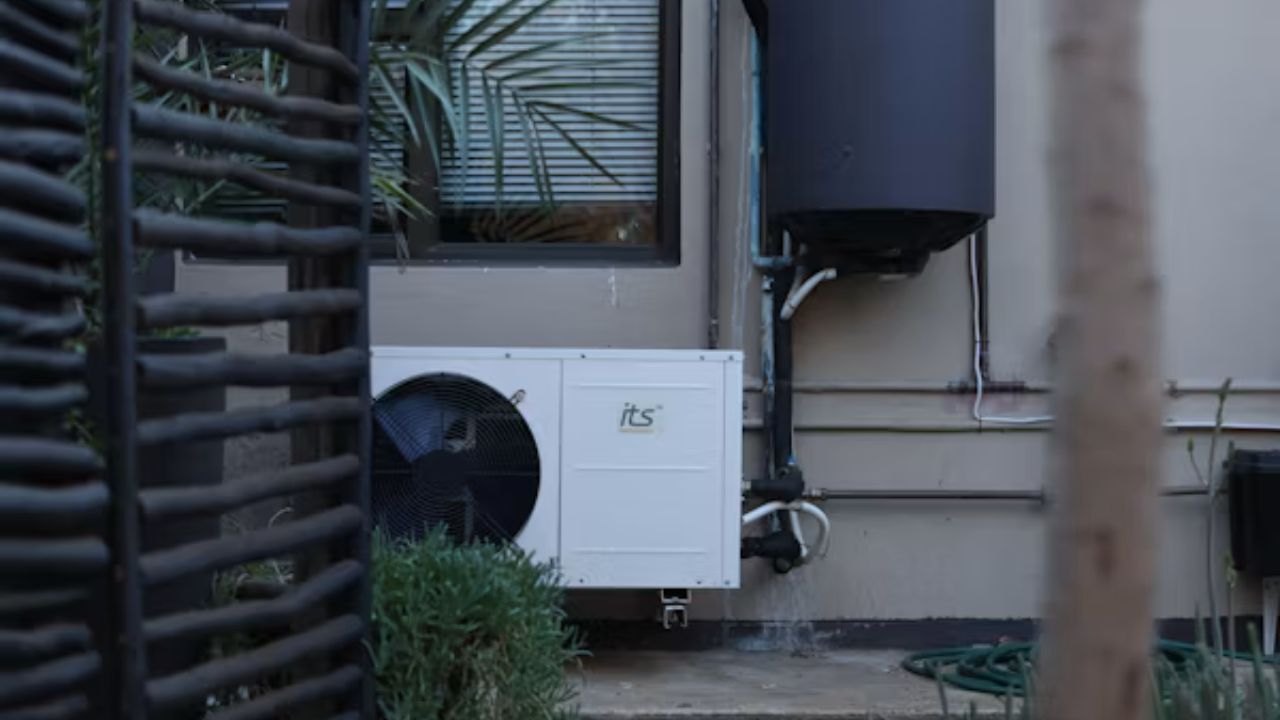
A heat pump water heater can look surprisingly ordinary. Most models resemble a tall electric storage water heater, complete with a cylindrical tank and familiar plumbing connections. The important difference sits on top: a compact refrigeration system that pulls warmth from the surrounding air and transfers it into the stored water.
That transfer process is the key to understanding how heat pump water heater works. A conventional electric water heater creates heat by passing electricity through resistance elements. A heat pump model mainly moves heat that already exists in the room. Because moving heat generally takes less electrical energy than producing the same amount through resistance, the system can deliver far more heat energy than the electricity it consumes.
You may also hear this appliance called a hybrid electric water heater. That name reflects how most residential units are built. They combine an efficient heat pump with conventional electric heating elements. The heat pump handles ordinary demand, while the elements can assist during periods of unusually heavy hot-water use or when the surrounding air is too cold for efficient heat-pump operation.
This guide explains the refrigeration cycle, tank operation, efficiency ratings, installation requirements, operating modes, costs, maintenance needs, climate considerations, noise and cooling effects. It also helps you decide whether this technology fits your household rather than treating it as the right answer for every home.
Quick Answer: How Does a Heat Pump Water Heater Work?
A heat pump water heater uses a fan to draw room air across an evaporator coil containing cold refrigerant. The refrigerant absorbs heat from that air and changes into a vapor. A compressor then raises the vapor’s pressure and temperature. The heated refrigerant passes through a condenser, where its energy is transferred to water in the storage tank. After releasing its heat, the refrigerant moves through an expansion device, cools down and begins the cycle again.
The basic sequence is:
- A fan draws in surrounding air.
- Refrigerant absorbs heat from the air.
- A compressor increases the refrigerant’s temperature.
- A condenser transfers that heat to tank water.
- An expansion device cools the refrigerant.
- The cycle repeats until the water reaches its set temperature.
The appliance gives off cooler, drier air because it removes both heat and some moisture from the room. Most residential models also contain electric resistance elements that can increase recovery speed when demand exceeds what the heat pump alone can provide.
Why Moving Heat Uses Less Energy Than Creating It
The easiest way to understand the appliance is to compare it with a refrigerator.
A refrigerator removes heat from inside its cabinet and releases that heat into the kitchen. A hybrid electric water heater uses the same broad refrigeration principle in the opposite practical arrangement: it collects heat from the room and releases it into a tank of water.
A standard resistance element is close to one-for-one at the appliance. Roughly one unit of electrical energy entering the element becomes one unit of heat in the water. A heat pump can use one unit of electricity to move multiple units of existing environmental heat.
This does not violate the laws of physics. The additional heat does not come from the electricity; it comes from the surrounding air. Electricity operates the compressor, fan, controls and refrigerant circuit that transport the heat.
That distinction explains why heat pump water heater efficiency can appear to exceed 100%. The rating is comparing useful heat delivered with purchased electrical energy consumed. The appliance is counting free environmental heat as part of its output.
According to the U.S. Department of Energy, water heating accounts for about 20% of average household energy use and is commonly the second-largest home energy expense. That makes efficiency improvements in this category financially meaningful, especially in homes replacing a conventional electric tank. U.S. Department of Energy
The Main Components Inside the System
Understanding the hardware makes the operating cycle much easier to picture.
Evaporator Coil
The evaporator is a heat exchanger exposed to room air. Cold liquid refrigerant enters the coil at low pressure. Because the refrigerant is colder than the surrounding air, heat naturally flows from the warmer air into it.
As the refrigerant absorbs energy, it boils and becomes a low-pressure vapor. “Boiling” does not mean the coil is extremely hot. Refrigerants are formulated to change phase at temperatures and pressures useful for refrigeration.
Dust on the air filter or evaporator restricts airflow and reduces this heat exchange. That is why filter cleaning matters more on a heat pump model than on an ordinary resistance tank.
Fan
A fan continuously moves air across the evaporator while the heat pump is running. It allows the appliance to collect heat from a much larger volume of air than it could through passive contact alone.
This fan is one source of operating noise. The airflow also explains why the unit needs adequate room volume or properly designed ducting.
Compressor
The compressor is the heart of the refrigeration cycle. It compresses the low-pressure refrigerant vapor leaving the evaporator. As pressure rises, the vapor’s temperature rises as well.
The refrigerant must become hotter than the tank water before heat can flow into that water. The compressor creates the temperature difference needed for that transfer.
Condenser
Hot, high-pressure refrigerant enters the condenser and gives up its heat to the stored water. Depending on the product design, the condenser may wrap around the tank, sit within a heat exchanger or transfer energy through a pumped water circuit.
As energy leaves the refrigerant, it condenses from vapor back into liquid. The tank water grows warmer without contacting the refrigerant.
Expansion Device
The liquid refrigerant passes through a metering or expansion device after leaving the condenser. Its pressure drops rapidly, lowering its temperature. The cold refrigerant then returns to the evaporator and can absorb room heat again.
Insulated Storage Tank
The tank stores heated water so the appliance does not have to match every faucet’s demand in real time. Good insulation limits standby losses between heating cycles.
Common residential capacities include 50, 65 and 80 gallons. ENERGY STAR advises considering a larger tank when switching from gas or when household hot-water demand has increased because heat-pump recovery is typically slower than high-input gas recovery. ENERGY STAR sizing guidance
Backup Electric Elements
Most integrated units contain one or two electric resistance elements. These operate like the elements in a conventional electric tank.
The controls may activate them when:
- Hot-water demand is unusually high
- The tank temperature drops quickly
- The surrounding room becomes too cold
- The user selects a high-demand mode
- The heat pump cannot recover quickly enough
- The refrigeration system has a fault
The elements provide flexibility, but frequent element use reduces the energy savings that made the appliance attractive in the first place.
Sensors and Electronic Controls
Temperature sensors monitor the tank, evaporator and surrounding air. A control board decides when to operate the compressor, fan or backup elements.
Many current products also offer Wi-Fi controls, scheduling, vacation settings, energy monitoring and utility demand-response functions.
Condensate Drain
Moist air passing over the cold evaporator can drop below its dew point, causing water vapor to condense. This water must be collected and discharged through a drain tube, floor drain or condensate pump.
A condensate drain is not optional installation detail. Poor drainage can cause leaks, moisture damage, algae buildup or a safety switch that stops the unit.
How Heat Pump Water Heater Works Step by Step
Let us follow one full heating cycle.
Step 1: Hot Water Leaves the Tank
Someone opens a shower valve. Hot water travels out through the tank’s upper outlet. At the same time, cold supply water enters near the bottom through a dip tube.
Because cold water is denser, it tends to remain near the lower portion of the tank initially. This temperature layering is called stratification. It helps preserve a usable volume of hot water near the top.
Step 2: Sensors Detect a Temperature Drop
As incoming cold water lowers tank temperature, sensors send information to the control board. The controller compares the measured temperature with the thermostat setting and determines that heat is needed.
The appliance’s selected mode influences what happens next. In efficiency mode, it may operate only the compressor and fan. In hybrid mode, it may bring in an element if the temperature is falling faster than the heat pump can recover.
Step 3: The Fan Collects Heat From the Room
The fan pulls room air through a filter and over the evaporator coil. Heat passes from the air into the cold refrigerant.
The discharged air is cooler and often drier than the intake air. This effect can be pleasant in a warm, humid garage, but less welcome in a conditioned utility room during winter.
Step 4: The Refrigerant Evaporates
The refrigerant absorbs enough energy to change from liquid to vapor. Phase change allows it to carry a substantial amount of heat without needing an extreme temperature increase in the evaporator.
At this point, the heat collected from the room is contained in a cool, low-pressure refrigerant vapor.
Step 5: The Compressor Raises Its Temperature
The compressor squeezes the vapor into a smaller volume. Its pressure and temperature rise. It is now hot enough to transfer energy into the tank water.
This is the most electricity-intensive part of heat-pump operation, but it still uses less energy than producing all the required heat through resistance elements.
Step 6: Heat Enters the Stored Water
Hot refrigerant flows through the condenser. Heat crosses the heat exchanger wall and enters the water. The two fluids remain physically separate.
As the refrigerant loses energy, it changes back into a high-pressure liquid.
Step 7: Pressure and Temperature Fall
The liquid travels through the expansion device. The sharp pressure reduction cools it enough to absorb heat from room air again.
Step 8: The Cycle Stops at the Set Point
The process continues until tank sensors report that the desired temperature has been restored. The compressor and fan turn off, and tank insulation helps retain the stored heat.
That complete loop is the technical answer to how heat pump water heater works: evaporation collects environmental heat, compression raises its temperature, condensation delivers it to water and expansion resets the refrigerant.
Heat Pump Water Heater Operating Modes
Mode names vary by manufacturer, but most controls offer some version of the following choices.
| Operating mode | Main heat source | Best use | Main trade-off |
|---|---|---|---|
| Heat pump or efficiency | Compressor only, when possible | Lowest routine energy use | Slower recovery |
| Hybrid or auto | Heat pump plus elements when needed | Everyday household use | Elements may increase consumption |
| Electric or resistance | Backup elements only | Temporary high demand or heat-pump fault | Highest operating cost |
| High demand | Heat pump and faster element assistance | Guests or consecutive showers | Lower efficiency |
| Vacation or away | Minimal heating or freeze protection | Extended absence | Hot water may require time to recover |
Heat Pump or Efficiency Mode
Heat pump mode prioritizes the refrigeration system and limits element operation. This usually produces the lowest electrical consumption, but the tank may recover more slowly after several showers.
A larger tank often makes efficiency mode more practical. Stored volume absorbs short periods of high demand while giving the heat pump more time to recover afterward.
Hybrid Mode
Hybrid mode balances energy use and recovery speed. The control board decides when the compressor alone is sufficient and when electric elements should help.
This is often the default setting because it can protect comfort without running the elements continuously. Its actual performance depends heavily on tank size, household usage and control logic.
High-Demand Mode
High-demand settings are useful when guests arrive, several people shower consecutively or a large bathtub must be filled. The unit sacrifices some efficiency by calling on resistance heat earlier.
This setting is better treated as a temporary tool than a permanent operating strategy.
Electric-Only Mode
Electric-only operation bypasses the heat pump and turns the appliance into something close to a conventional resistance tank. It may be helpful during service or under unusual conditions, but it removes most of the efficiency advantage.
Vacation Mode
Vacation mode reduces energy used to maintain a full tank while the household is away. Some products allow an end date so the tank reheats before occupants return.
Check the manufacturer’s sanitation and freeze-protection instructions rather than disconnecting power without a plan.
Understanding UEF, COP and First-Hour Rating
Efficiency and capacity are separate questions. A unit can be very efficient but still be too small for a household’s peak demand.
Uniform Energy Factor
Uniform Energy Factor, usually shortened to UEF, measures overall water-heater efficiency under a standardized Department of Energy test procedure. A higher UEF generally means better efficiency within a comparable product category and usage bin. ENERGY STAR product criteria
A UEF should not be read as a simple promise about your power bill. Real performance changes with:
- Inlet-water temperature
- Room-air temperature
- Hot-water consumption
- Thermostat setting
- Operating mode
- Duct configuration
- Maintenance
- Frequency of resistance-element operation
Use UEF to compare similar products, then examine first-hour delivery, tank capacity, noise and installation requirements.
Coefficient of Performance
Coefficient of performance, or COP, compares useful heat delivered with electrical energy consumed during specified conditions. A COP of 3 means the system delivers about three units of heat for each unit of electricity used, with the remaining energy collected from the air.
COP changes as operating conditions change. Warmer intake air usually helps. Cold air, high water-temperature settings and resistance-element use can reduce whole-system performance.
First-Hour Rating
The first-hour rating estimates how much hot water a full tank can provide during a standardized first hour of heavy use, accounting for both stored volume and recovery.
This number is often more useful for comfort than tank size alone. Two 50-gallon products can have different first-hour performance because their controls, heat-pump capacity and element strategy differ.
Recovery Rate
Recovery rate describes how quickly the appliance can raise incoming water to the chosen temperature. Heat-pump-only recovery is usually slower than resistance or gas recovery.
That does not automatically mean users will run out of hot water. A correctly sized tank stores enough water to cover peak use while the compressor restores temperature between draws.
Heat Pump, Electric Tank, Gas and Tankless Compared
| Feature | Heat pump tank | Standard electric tank | Gas storage tank | Tankless gas |
|---|---|---|---|---|
| Primary heating method | Transfers heat from air | Creates heat through resistance | Burns fuel | Burns fuel on demand |
| Storage tank | Yes | Yes | Yes | No |
| Typical energy efficiency | Very high | Moderate | Varies | Generally higher than standard gas storage |
| Recovery speed | Moderate; faster with elements | Moderate | Often fast | Continuous within flow limit |
| Installation needs | Air volume, drain and electricity | Electricity | Venting and gas | Gas capacity, venting and electricity |
| Effect on room | Cools and dehumidifies | Minimal | Adds some surrounding heat | Minimal indoors when properly vented |
| Routine noise | Fan and compressor | Nearly silent | Burner and vent noise | Burner and fan noise |
| Best fit | Replacing electric tank in suitable space | Low-cost simple installation | Homes already set up for gas | Households wanting long draws within rated flow |
Versus a Standard Electric Tank
Replacing a resistance tank is often the clearest financial case. Both appliances use electricity and store hot water, but the heat pump model can consume much less energy under suitable conditions.
The new unit may be taller, require more service clearance and need a drainage route. Electrical requirements depend on the model; do not assume every unit uses the same circuit as the old heater.
Versus a Gas Water Heater
Moving from gas to a heat pump eliminates on-site combustion and its associated flue, burner and carbon-monoxide concerns. It may also require electrical work, a larger tank and changes to the installation area.
Financial savings are less predictable than when replacing resistance electricity because local gas and electricity prices differ sharply. Compare estimated annual operating costs using your utility rates rather than relying on a national average.
Versus Tankless
A tankless heater does not provide limitless hot water in every situation. It can run continuously, but only within its rated flow and temperature-rise capacity.
A heat pump unit stores a finite volume, yet can serve several fixtures briefly at a high combined flow. The right choice depends on household habits, fuel availability, space and electrical or gas infrastructure.
Where a Heat Pump Water Heater Performs Best
The installation space is part of the system. A highly rated appliance placed in a poor location may disappoint.
ENERGY STAR advises installing many integrated units in an interior space that stays around 40°F to 90°F year-round and provides roughly 1,000 cubic feet of surrounding air, unless approved ducting or manufacturer instructions allow another arrangement. ENERGY STAR heat pump water heaters
Good locations often include:
- A warm basement
- A large garage in a mild climate
- A utility room with excess heat
- A mechanical room that meets volume requirements
- A laundry area with suitable drainage and clearance
Poor candidates may include:
- A tiny sealed closet
- An unheated space in a severe winter climate
- A bedroom-adjacent room where noise is objectionable
- A finished room where cooling is unwanted
- An area without practical condensate drainage
Why Room Volume Matters
An integrated unit temporarily cools the air surrounding it. In a large room, warmer replacement air mixes in and replenishes the heat source. In a sealed closet, the unit may cool its own intake air rapidly and lose efficiency.
Some manufacturers allow louvered doors, transfer grilles or duct kits. These solutions must follow the product’s airflow limits because poor duct design can reduce capacity, increase noise and cause faults.
The Cooling Effect Is Neither Free Air Conditioning nor Pure Waste
In a hot, humid garage, the cool and dry exhaust can be useful. In winter, when the heater draws warmth from space heated by a furnace or heat pump, some of its apparent gain comes from the home’s heating system.
That does not make the appliance ineffective. It means installation context affects whole-building savings. A warm basement that receives heat from the ground, appliances and distribution losses may be a better winter location than a small conditioned bathroom.
Humidity and Dehumidification
Water condensing on the evaporator produces a modest dehumidifying effect while the compressor runs. This can help in a damp basement, but the appliance should not be treated as a dedicated moisture-control system.
Runtime follows hot-water demand, not humidity. A separate dehumidifier may still be needed to keep moisture within a healthy range.
Choosing the Right Tank Size
Tank sizing is one of the most common points of failure.
A 50-gallon model may suit a moderate-use household, but occupant count alone does not tell the whole story. Four people who shower at different times present a different load from four people showering consecutively every morning.
Review these demand factors:
- Number and duration of showers
- Showerhead flow rates
- Large soaking tubs
- Simultaneous fixture use
- Dishwasher and laundry schedules
- Visitors and weekend demand
- Desired reliance on efficiency mode
- Local incoming-water temperature
Common residential choices include 50-gallon heat pump water heater, 65-gallon and 80-gallon models. Upsizing can reduce resistance-element use because more stored hot water is available during peak demand.
An oversized tank does have higher purchase cost, takes up more space and has some extra standby loss. Still, modest upsizing often works well with heat-pump technology because it allows slower, efficient recovery to meet household demand.
A Simple Peak-Demand Example
Imagine a household taking three consecutive showers at 2 gallons per minute for eight minutes each. That represents 48 gallons of mixed shower water, not necessarily 48 gallons taken directly from the hot-water tank. Cold water is blended at the shower valve.
The actual hot-water share changes with tank temperature and incoming-water temperature. Winter inlet water is colder, so each shower may require a larger proportion of stored hot water.
This is why sizing based only on “number of bedrooms” can fail. Examine the product’s first-hour rating and your heaviest one-hour usage pattern.
Installation Requirements and Common Surprises
A professional installation assessment should cover more than pipe connections.
Electrical Supply
Many units use a 240-volt dedicated circuit and retain resistance elements. Newer 120-volt products exist for certain retrofit situations, but their capacity, recovery strategy and installation limits differ.
An electrician may need to assess:
- Circuit voltage
- Breaker rating
- Wire size
- Disconnect requirements
- Panel capacity
- Local code
- Manufacturer specifications
Never choose a breaker or wire size from a general article. Use the nameplate, installation manual and applicable electrical code.
Physical Dimensions
The compressor assembly can make the unit taller than a standard tank. Measure:
- Floor-to-ceiling height
- Door width
- Stair and hallway clearance
- Space for filter removal
- Service access
- Plumbing connection positions
- Required side and top clearances
A unit that physically fits may still be unserviceable if a technician cannot reach the fan, filter, anode or control panel.
Drainage
Plan where condensate will go before buying the appliance. Possible solutions include:
- Gravity drainage to a floor drain
- A trapped or air-gapped drain where required
- An approved condensate pump
- A drain pan with a separate safe discharge route
Installers must follow manufacturer and local code requirements. Condensate should not be routed where freezing, blockage or unnoticed leakage can cause damage.
Noise
A heat pump water heater noise level may resemble a modern refrigerator, dehumidifier or small air conditioner, but sound specifications and tonal quality vary.
Check the rated decibels and placement. A few decibels can matter near a bedroom, home office or living area. Vibration isolation, solid mounting and correct clearances can prevent avoidable buzzing or resonance.
Airflow and Ducting
Some products can duct intake air, exhaust air or both. Ducting may solve space or comfort problems, but it adds resistance to airflow.
The design must respect maximum equivalent duct length, diameter, elbow count and termination requirements. Improvised small ductwork can impair performance and void expectations.
Water Quality and Expansion Control
Hard water promotes scale. Corrosive water can shorten tank and anode life. A closed plumbing system may require a properly sized thermal expansion tank.
Installation should also address a temperature-and-pressure relief valve, shutoff valve, drain access, seismic restraints where required and scald protection when storage temperatures are elevated.
Costs, Savings and Payback
A heat pump model usually costs more to buy and install than a basic resistance tank. The extra cost may include electrical changes, condensate drainage, relocation, ducting or a larger tank.
Annual savings depend on:
- Previous fuel and appliance type
- Local electricity and gas rates
- Hot-water consumption
- Climate and installation temperature
- Selected operating mode
- Tank temperature
- Resistance-element runtime
- Maintenance
- Incentives
The best way to estimate payback is to compare total installed cost and expected annual energy use, not sticker prices alone.
Use this equation:
Simple payback = net additional installed cost ÷ estimated annual savings
If a heat pump installation costs $2,000 more after available incentives and saves an estimated $350 per year, the simple payback is about 5.7 years. This calculation does not include financing costs, rate changes, maintenance differences or the time value of money.
For current product comparisons, ENERGY STAR maintains a certified-model database with efficiency and model information. Local rebates can vary by utility and location. ENERGY STAR Product Finder
Treat any tax-credit claim carefully. Rules, eligibility dates and annual limits can change. Confirm the current tax year’s requirements through ENERGY STAR and the IRS before purchasing based on an expected credit.
What Happens in Cold Weather?
An indoor integrated heater does not collect heat directly from outdoor air unless ducted that way. Still, outdoor weather can affect the temperature of garages, basements and utility spaces.
As intake air gets colder:
- The refrigerant collects less usable heat
- Compressor runtime may increase
- Recovery can slow
- Efficiency may fall
- Backup elements may operate more often
- Some units may stop heat-pump operation below a specified temperature
This is why climate cannot be separated from placement. A garage installation that works beautifully in Florida may perform differently through a Minnesota winter.
Consult the manufacturer’s allowed ambient-temperature range, not just a broad industry recommendation.
Maintenance and Expected Service Needs
A heat pump model has more mechanical components than a standard electric tank, but routine homeowner maintenance is manageable.
Clean the Air Filter
Inspect the filter according to the manual, often every few months. Dust, pet hair and lint restrict airflow across the evaporator.
A dirty filter can increase runtime, lower efficiency, increase noise and contribute to operating faults. Laundry-room installations may need more frequent attention because lint loads can be high.
Keep the Condensate System Clear
Check the drain line and collection pan for blockage, algae or leakage. A slow drain can overflow even when the refrigeration system is operating normally.
Where the manufacturer permits, periodic cleaning can prevent buildup. Follow the manual rather than pouring harsh chemicals into the system.
Inspect the Tank and Plumbing
Look for corrosion, dripping fittings, relief-valve discharge and moisture around the base. A leaking steel tank generally requires replacement; a wet floor does not always mean the tank itself has failed, so trace the source carefully.
Service the Anode Rod
Many storage tanks use a sacrificial anode rod to protect the steel vessel from corrosion. Its inspection or replacement schedule depends on water chemistry, tank design and manufacturer guidance.
Some models use powered anodes. Access can be difficult if the unit was installed without adequate overhead clearance.
Flush Sediment When Appropriate
Sediment can collect at the bottom of the tank, especially in hard-water areas. Manufacturer guidance varies, so follow the correct flushing procedure for the model.
Water from a heater can cause severe burns. If the process is unfamiliar, have a qualified plumber handle it.
Arrange Professional Service for Refrigeration Faults
Homeowners should not open or recharge the sealed refrigerant circuit. Compressor, refrigerant, coil and electronic faults require appropriately trained service personnel.
When comparing products, look beyond the warranty term. Check whether qualified local technicians and replacement parts are actually available.
Common Problems and What They Usually Mean
The Water Is Not Hot Enough
Possible causes include an undersized tank, unusually high demand, an inefficient mode choice, a low temperature setting, failed elements, a compressor fault or cold installation conditions.
Start with the control display and manual. Do not raise the temperature casually; higher settings increase scald risk and may increase energy use.
Recovery Seems Too Slow
Heat-pump-only recovery is intentionally slower than aggressive resistance recovery. If comfort is inadequate, review scheduling, tank size, mode and actual water use.
A permanently selected efficiency mode may not suit a household with tightly clustered showers. Hybrid mode or demand shifting may solve the issue without replacing the appliance.
The Unit Runs Often
Longer compressor runtime is not automatically a defect. Heat pumps use lower input over longer periods. Frequent operation can also reflect high water use, cold intake air, a dirty filter, heat loss or a plumbing leak.
Water Is Appearing Near the Unit
The source may be normal condensate with a blocked drain, a leaking fitting, relief-valve discharge, a drain-pan problem or tank failure. Shut off energy and water when necessary and investigate promptly.
Utility Bills Did Not Drop as Expected
Check whether the unit is operating in electric-only or high-demand mode. Look for heavy element use, poor airflow, cold ambient conditions, changed household demand or an incorrect utility-rate comparison.
Savings claims based on replacement of a resistance tank may not apply to a household previously using inexpensive gas.
Is a Heat Pump Water Heater Right for Your Home?
It is usually a strong candidate when:
- You are replacing a conventional electric tank
- The installation area stays within the required temperature range
- The room provides enough air or supports approved ducting
- Condensate can be drained safely
- You can accommodate a suitably sized tank
- Some fan and compressor noise is acceptable
- You plan to remain in the home long enough to benefit from energy savings
Think more carefully when:
- The only location is a small sealed closet
- The space becomes very cold
- Your household has extreme peak demand
- Cooling the installation room would be uncomfortable
- Electrical upgrades are unusually expensive
- Local service support is limited
- Low gas prices make expected savings small
The decision should combine operating cost, comfort, installation feasibility and serviceability. Efficiency by itself is not enough.
Practical Ways to Get Better Performance
Use Scheduling Instead of Permanent High-Demand Mode
If heavy use happens at predictable times, use the unit’s scheduling features or change modes temporarily. Running high-demand mode around the clock may call on the resistance elements unnecessarily.
Avoid Stacking Major Hot-Water Loads
Running several showers, hot laundry and a dishwasher within the same hour can exhaust stored capacity. Spreading these loads gives the compressor time to recover efficiently.
Consider Efficient Fixtures
A lower-flow showerhead reduces both water and water-heating demand. This can improve perceived tank capacity without increasing the storage temperature.
Keep the Set Point Sensible
A moderate temperature reduces standby loss and scald risk. Some homes store water hotter and use a thermostatic mixing valve to extend effective capacity, but that approach requires correct design and maintenance.
Follow public-health, manufacturer and local-code guidance when selecting a storage temperature.
Monitor Element Usage
Some connected models report compressor and element energy separately. This data is valuable. Frequent resistance use may reveal undersizing, an unsuitable mode or concentrated demand.
Reassess After Seasonal Changes
A garage installation may behave differently in January than in July. Compare energy consumption and comfort across seasons before deciding that one control mode is best year-round.
A Realistic Buying Checklist
Before ordering a unit, ask:
- What is the model’s UEF?
- What is its first-hour rating?
- What tank capacity matches our peak demand?
- Which modes are available?
- What ambient temperatures are allowed?
- How much unobstructed air volume is required?
- Can the intake or exhaust be ducted?
- What are the duct limits?
- What is the rated sound level?
- What circuit does it require?
- Can the existing panel support it?
- Where will condensate drain?
- Can the filter be removed after installation?
- Is there room to replace the anode?
- Who provides local warranty service?
- What does the tank warranty exclude?
- Are utility rebates available?
- What is the final installed cost after all necessary work?
Get written quotes that separate equipment, plumbing, electrical work, drainage, permits and disposal. That makes competing estimates easier to compare.
Frequently Asked Questions
Does a heat pump water heater work without warm outdoor weather?
Yes. An integrated model normally draws heat from the air in the room where it is installed, not directly from outdoor air. It still needs that room to remain within the manufacturer’s permitted temperature range. A cold garage can reduce performance even though the appliance is technically indoors.
Does a heat pump water heater make the room cold?
It removes heat from the surrounding air, so its exhaust is cooler than its intake. The effect is more noticeable in a small room and during long heating cycles. Proper room volume, transfer grilles or approved ducting can help manage it.
What is the difference between a hybrid and heat pump water heater?
The terms commonly describe the same residential product. “Heat pump” identifies the primary technology. “Hybrid” emphasizes that the tank also contains electric resistance elements for backup or faster recovery.
Will it work during a power outage?
No standard electrically powered model can operate normally without electricity. The compressor, fan and electronic controls require power. Stored hot water may remain usable for a period, but the tank cannot reheat until electricity returns.
How long does it take to heat a tank?
The answer depends on tank capacity, starting temperature, room temperature, heat-pump capacity and selected mode. Heat-pump-only operation can take several hours to heat a cold tank. Hybrid or high-demand operation is faster because resistance elements assist.
Can I install one in a closet?
Only when the chosen model and installation design satisfy its airflow requirements. A small sealed closet is generally unsuitable. Some systems allow louvered doors, transfer grilles or ducted intake and exhaust. Follow the specific installation manual.
Does a heat pump water heater need a drain?
Yes, integrated models normally produce condensate and need an approved disposal route. The tank should also have appropriate drainage provisions and a temperature-and-pressure relief discharge arrangement under local code.
Is it louder than a normal electric water heater?
Yes. A standard resistance tank is nearly silent while heating. A heat pump has a compressor and fan, producing sound similar to certain refrigerators, dehumidifiers or small air conditioners. Sound ratings vary by model.
Can it replace a gas water heater?
Often, but the conversion may require a suitable electrical circuit, condensate drainage, capped gas piping, changes to venting and possibly a larger tank. Compare utility rates and complete installation costs before deciding.
How much electricity can it save?
Savings vary with the old appliance, climate, rates and usage. The largest reduction is usually seen when replacing a conventional electric resistance tank. Product UEF and estimated annual consumption provide better comparison points than a universal percentage claim.
Why does tank size matter so much?
The heat pump transfers heat efficiently but relatively slowly. A larger tank stores more energy and reduces the chance that backup elements must run during peak demand. Correct capacity helps preserve both comfort and efficiency.
What temperature should it be set to?
Many households use a moderate setting around 120°F, but health needs, local guidance, plumbing design and manufacturer instructions can affect the correct choice. Higher temperatures increase burn risk and may require a thermostatic mixing valve.
Is a heat pump water heater the same as a whole-home HVAC heat pump?
No. Both use a refrigeration cycle, but they serve different loads. A whole-home heat pump heats or cools indoor air. A water-heating unit transfers heat into stored domestic water.
Final Verdict
A heat pump water heater is best understood as a refrigerator working toward a different goal. It absorbs low-temperature heat from room air, raises that heat’s temperature through compression and releases it into stored water.
That simple explanation hides an important practical truth: the installation environment matters almost as much as the appliance. Tank size, air volume, temperature, drainage, household demand and control settings determine how efficiently and comfortably it performs.
For a home replacing a resistance-electric tank, with adequate space and a sensible drainage route, the technology can produce substantial long-term savings. For a small cold closet, a noise-sensitive location or a household with intense back-to-back demand, careful design is essential.
Once you understand the refrigeration cycle, heat pump mode, backup elements, Uniform Energy Factor and first-hour rating, shopping becomes much easier. You are no longer choosing the model with the most impressive headline number. You are choosing a complete hot-water system that fits the building and the people living in it.